
 AC repair
 Furnace & heating
 Heat pumps
 Carrier
 Trane
TraneSeasonal tune-up and full diagnostic on your Carrier, Trane, or Goodman system - readings shown to you before any repair is proposed
Diagnosis first, numbers second - you approve the repair price before a single part goes in.
Get your free estimateGoodman Ductwork Repair: The Miami Owner’s Guide
Goodman ductwork repair in Miami typically runs $175 – $765 installed, depending on how much duct has failed and where it’s located. Most jobs we handle are diagnosed and repaired same-day, because we stock common Goodman-compatible duct fittings, collars, and sealing materials on our trucks. If you’re noticing weak airflow from certain vents, rooms that never reach set temperature, or a musty smell when the blower kicks on, you’re likely dealing with compromised ductwork feeding off your Goodman air handler.
Here’s the reality in Miami: ductwork fails faster here than almost anywhere else in the country. Humidity sits above 70% for months at a stretch, attics hit 130°F in August, and that combination breaks down tape, mastic, and flexible duct insulation years before the equipment itself gives out. A Goodman system can run for 12 – 15 years with proper duct maintenance. The ducts themselves often need real attention every 7 – 10 years in our climate. That’s not a knock on Goodman. It’s just what Miami does to anything made of foil, fiberglass, and adhesive.
We’re an independent service provider. We’re not affiliated with Goodman. What we do have is factory training on Goodman equipment, nine major brands total, and trucks stocked with the duct repair materials we actually use on Miami jobs every week.
Which Goodman Models This Applies To
This page covers ductwork tied to Goodman air handlers and furnaces across their current and legacy lineup: the GSX, GSZ, and GMV series, the AVPEC and MBVC air handlers, and older GMS and GMH gas furnaces still running in plenty of Miami homes.
The compatibility gotcha most owners miss: your Goodman system’s model number tells us almost nothing about your ductwork. Ducts are sized to the home’s airflow requirements, not the equipment badge. A 3-ton Goodman GSX16 condenser paired with the wrong duct diameter will underperform no matter how well the unit itself runs. That’s why we measure static pressure and duct dimensions before quoting any repair. It’s also why we carry multiple sizes of flex duct (R-6 and R-8 insulation values, which is the Miami code minimum for unconditioned attics), sheet metal collars, takeoffs, and mastic on the truck. The R-value matters here specifically: R-4.2 duct is legal in some climates, but Miami’s energy code requires R-6 minimum in attics, and R-8 is what we recommend for homes where the attic regularly exceeds 120°F.
On the OEM-versus-aftermarket question: for ductwork itself, “OEM” isn’t really a meaningful category. Goodman doesn’t manufacture duct. What matters is the insulation R-value, the vapor barrier quality, and the sealing method. We use commercial-grade products that meet or exceed Miami code, and we seal every joint with mastic, not tape. Tape fails in Miami attics within a few summers. Mastic, applied correctly, lasts the life of the duct.
Styles & brands we work with
Signs Your Goodman Ductwork Is Failing
- Some rooms never reach temperature, no matter the thermostat set point. Cold air is bleeding into the attic through a disconnected or torn duct run before it reaches the room. We find this in the hottest part of the summer, when flex duct expands and pulls away from its collar.
- A musty or “dirty attic” smell when the blower runs. Your return duct has a breach and it’s pulling hot, humid attic air, along with whatever else is up there, into your Goodman system. In Miami this is also a mold risk because of the moisture load.
- Electric bill climbs while comfort drops. Leaky ducts can waste 20 – 30% of conditioned air. Your Goodman system runs longer to compensate, and your FPL bill shows it.
- Visible condensation or water staining on ceiling registers or duct boots. Warm, humid Miami air is hitting the cold metal surface and sweating. This is a humidity-control failure as much as a duct problem, and it can drip onto drywall.
- Insulation is falling off or duct is visibly crushed in the attic. R-6 and R-8 flex duct has a lifespan. Once the outer jacket tears or the inner liner collapses, air barely moves through it. By the time you can see this, the run needs replacement, not patching.
See the difference
 Before
 After
After Before
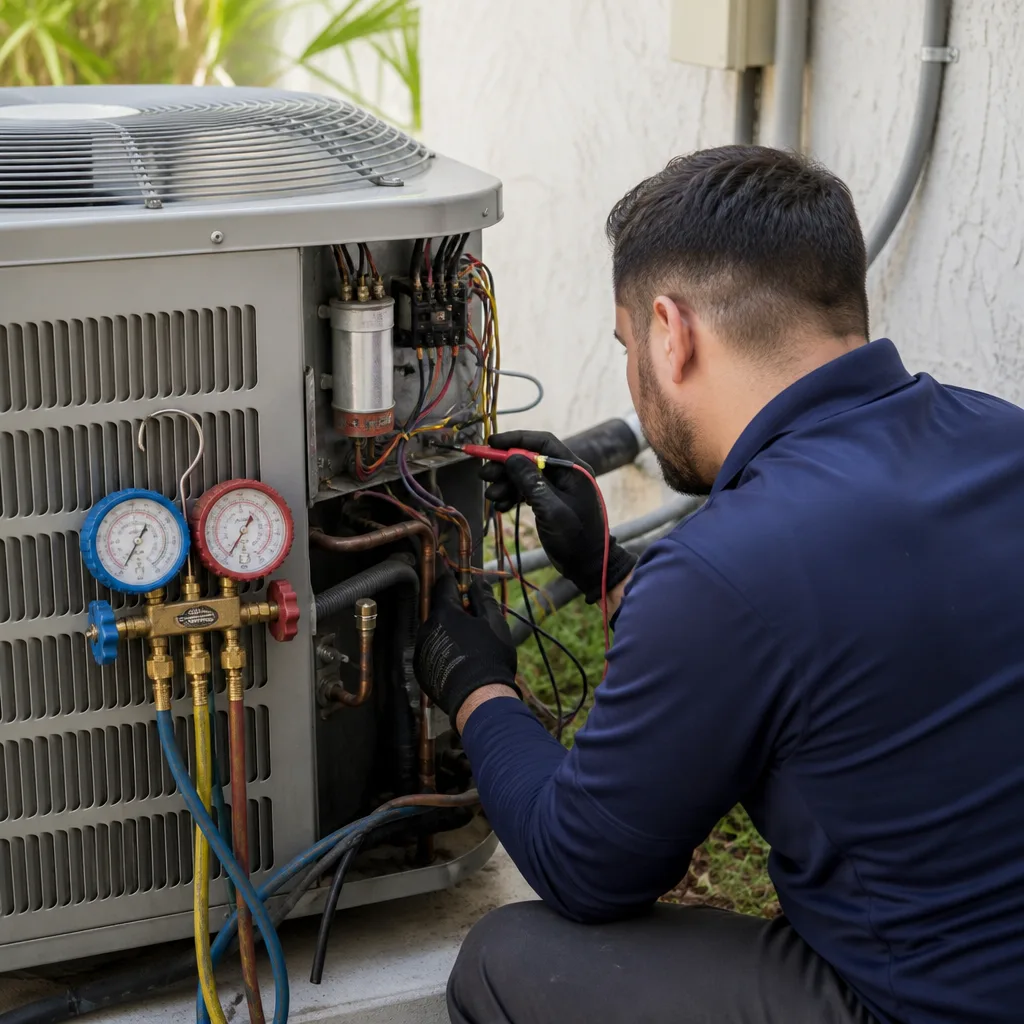 After
After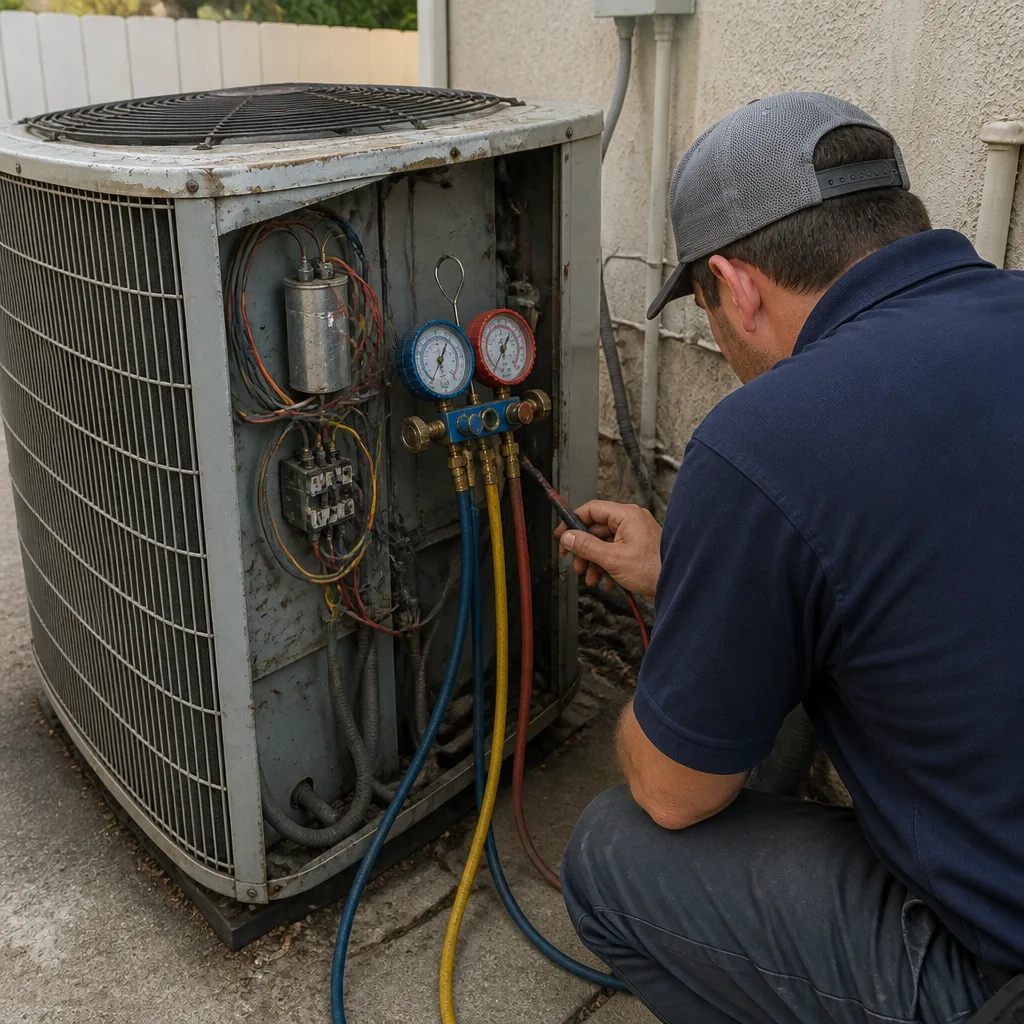 Before
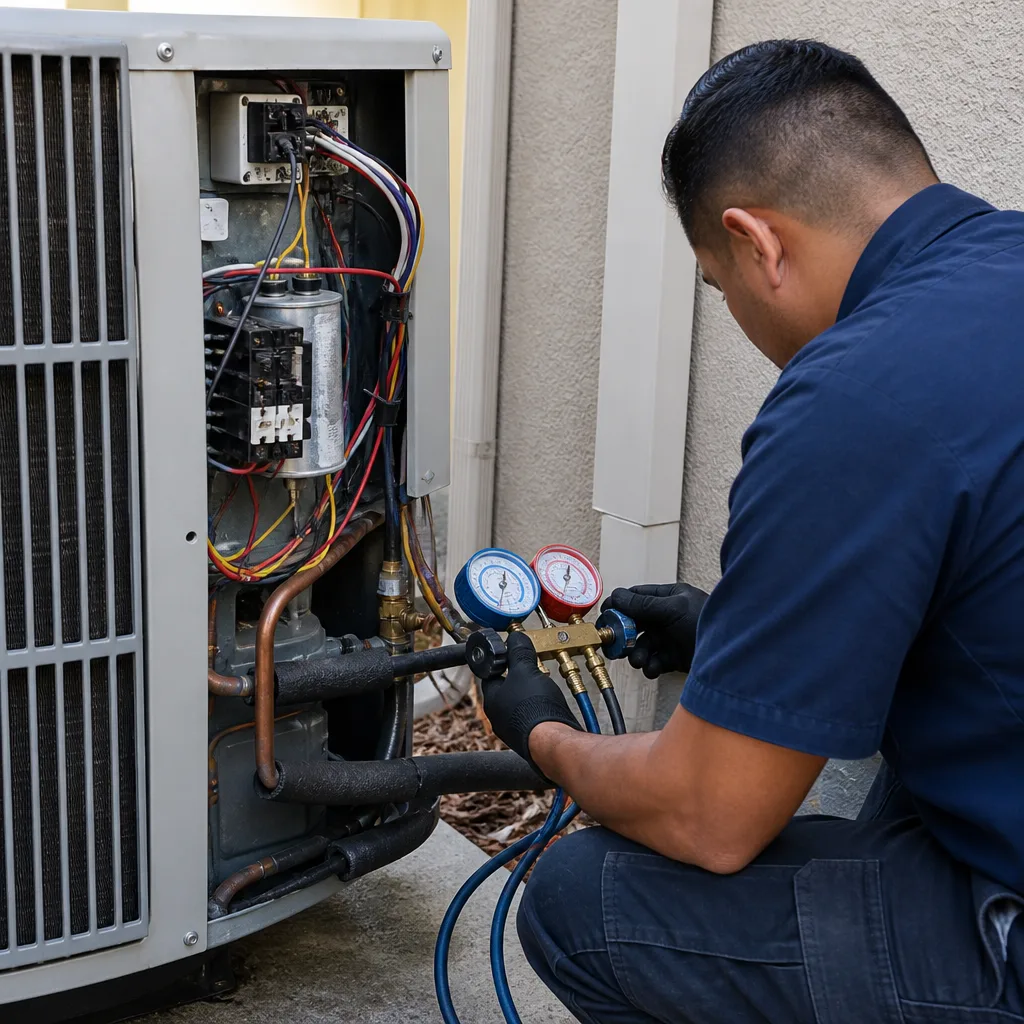 After
AfterReplacement Cost & What’s Included
Ductwork repair in Miami lands in a broad range because no two failures are the same size. A single torn flex run with a new collar and mastic sealing might be $175 – $325. Replacing a crushed return duct run of 15 – 25 feet with R-8 flex, new hangers, and proper sealing typically runs $400 – $765 depending on attic access and length. If multiple runs failed, the job is quoted per run, not per hour, which keeps the number predictable.
Every duct repair from Dalton Heating & Air Miami includes a written price before any work starts, and a written guarantee for a full year. If the repair fails in that time, we return at no charge. That’s not a promotional line. It’s the Garrison Standard, and it’s been the rule since 2003. Marco Benitez, the owner here in Miami, puts the same requirement on every tech who steps into a truck: static pressure checked, leak points identified, seal done once, done right.
What drives cost: attic accessibility (crawl-and-reach vs. walkable), duct length, insulation R-value, and whether we’re replacing a single run or re-sealing multiple joints. We’ll show you the failing section before we touch it and explain what we’re replacing and why.
DIY or Call Us?
Ductwork repair is one of the safer HVAC jobs for a homeowner to inspect, but it’s misleading to call it a simple weekend fix. You can safely walk your attic with a flashlight and look for obvious tears, disconnected runs, or crushed flex. Keep your weight on the joists. If you see a duct end hanging free or a tear you can put your hand through, that’s confirmed leakage.
Where DIY goes wrong in Miami: taping a tear with duct tape (it fails within one South Florida summer), missing the secondary leaks further down the run, or reconnecting a duct without sealing it with mastic, which just moves the leak to the joint. The bigger issue is access and heat. A Miami attic in July is dangerous to work in for more than 20 minutes without hydration and ventilation. We do this work year-round with the right equipment. If you’d rather not bake in your own attic, call (850) 754-6042 and we’ll diagnose it, quote it in writing, and fix it the same visit.
FAQs
Flexible ductwork in Miami attics typically lasts 7 – 15 years depending on attic heat, humidity, and installation quality. R-8 with properly sealed joints outlasts thinner R-4.2 or R-6 material by several years in our climate, which is why we recommend R-8 for any replacement run.
Small tears near a seam can often be repaired with mastic and a proper patch, but a crushed or internally delaminated flex run needs replacement, not repair. We’ll only recommend replacement when patching would fail within a year, because the job is guaranteed in writing and we don’t want to come back. Call (850) 754-6042 for an honest look at what you have.
Most single-run duct repairs take 1 – 2 hours once we’re on site. Multiple runs or difficult attic access can stretch the job to a half day, but you’ll have a firm labor figure in writing before we start, and the repair is guaranteed for a full year.
Yes, we keep R-6 and R-8 flex duct, sheet metal collars, takeoffs, mastic, and hangers on our Miami trucks, along with parts for Goodman, Carrier, Trane, and Lennox systems. For most duct repairs we complete the work in one visit without a follow-up parts order. If you have a specific question about what matches your system, call (850) 754-6042.
Tell me what it’s doing, I’ll tell you what it costs – in writing, before I touch it.
Written by Marco Benitez, Owner, Dalton Heating & Air Miami at Dalton Heating & Air Miami, serving Miami and nearby areas.