
Last updated October 16, 2026
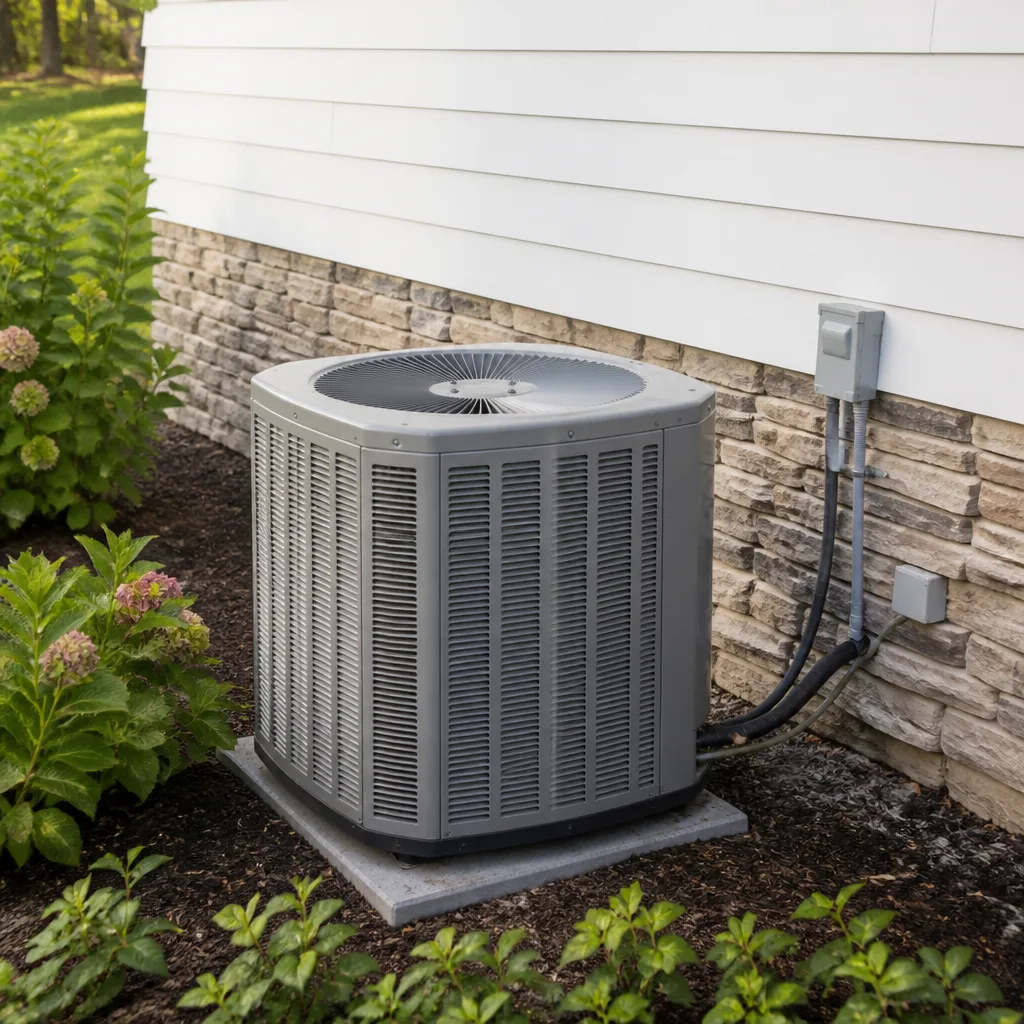 AC repair
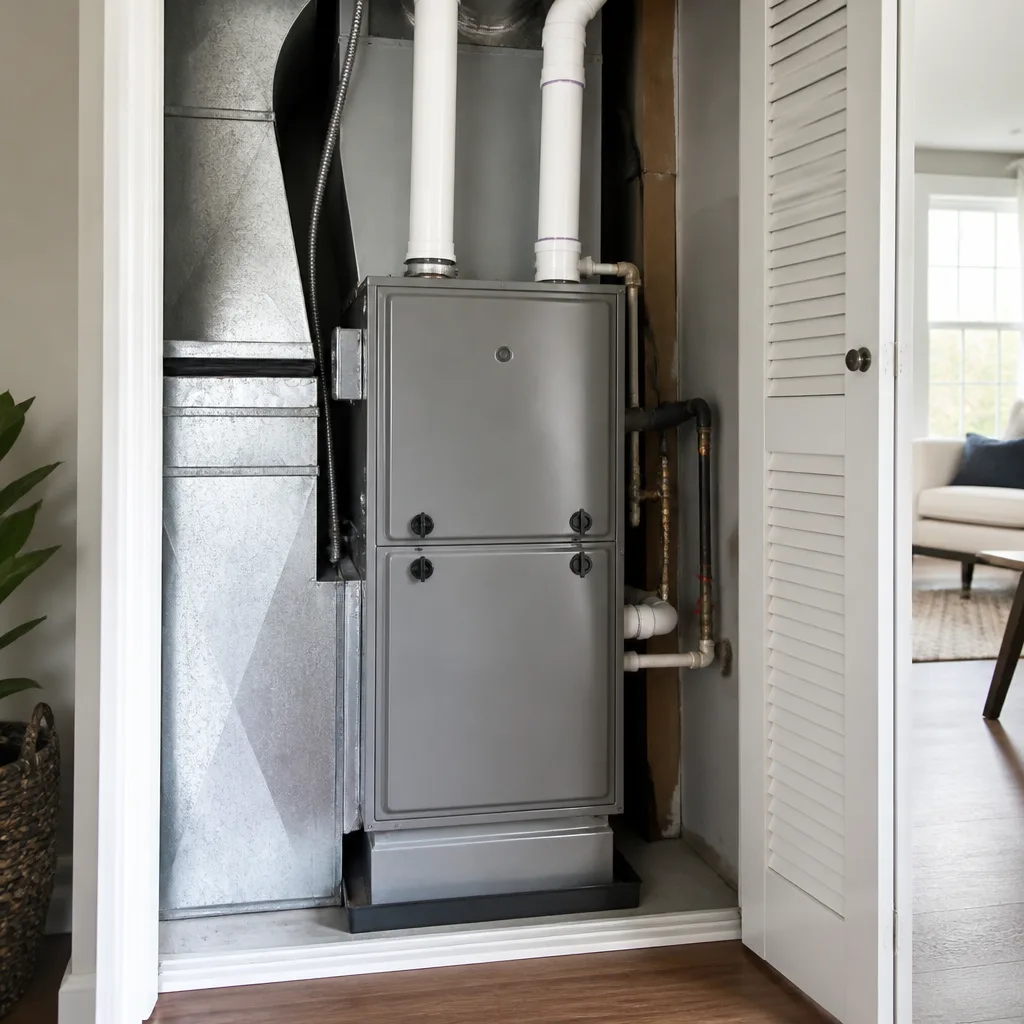 Furnace & heating
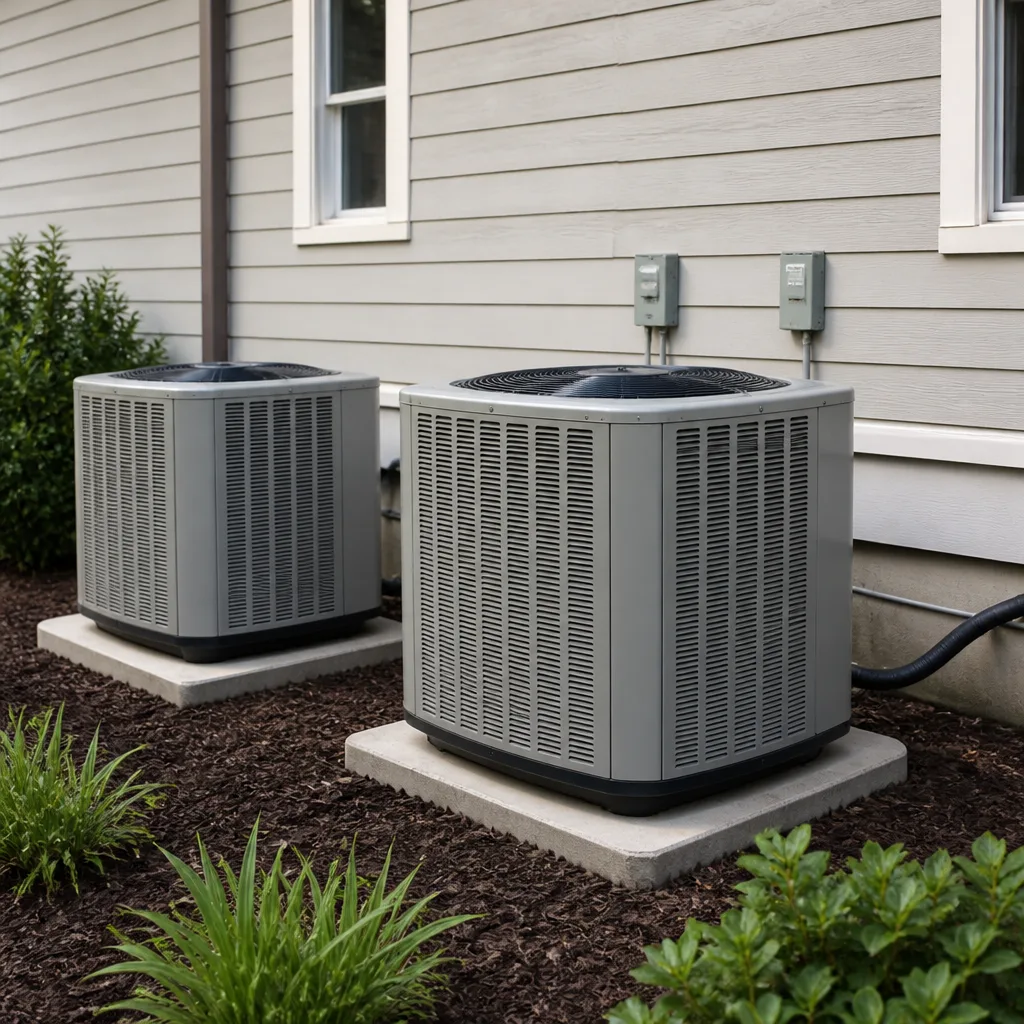 Heat pumps
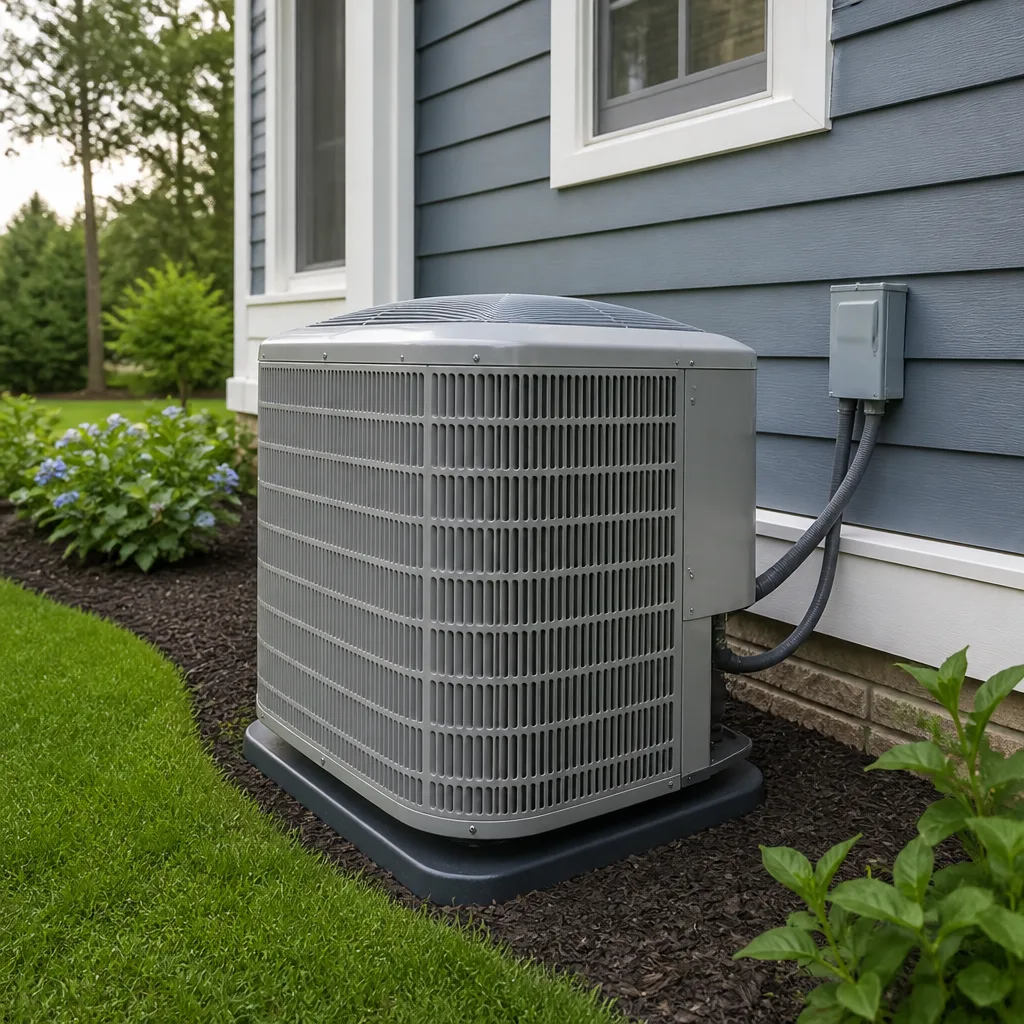 Carrier
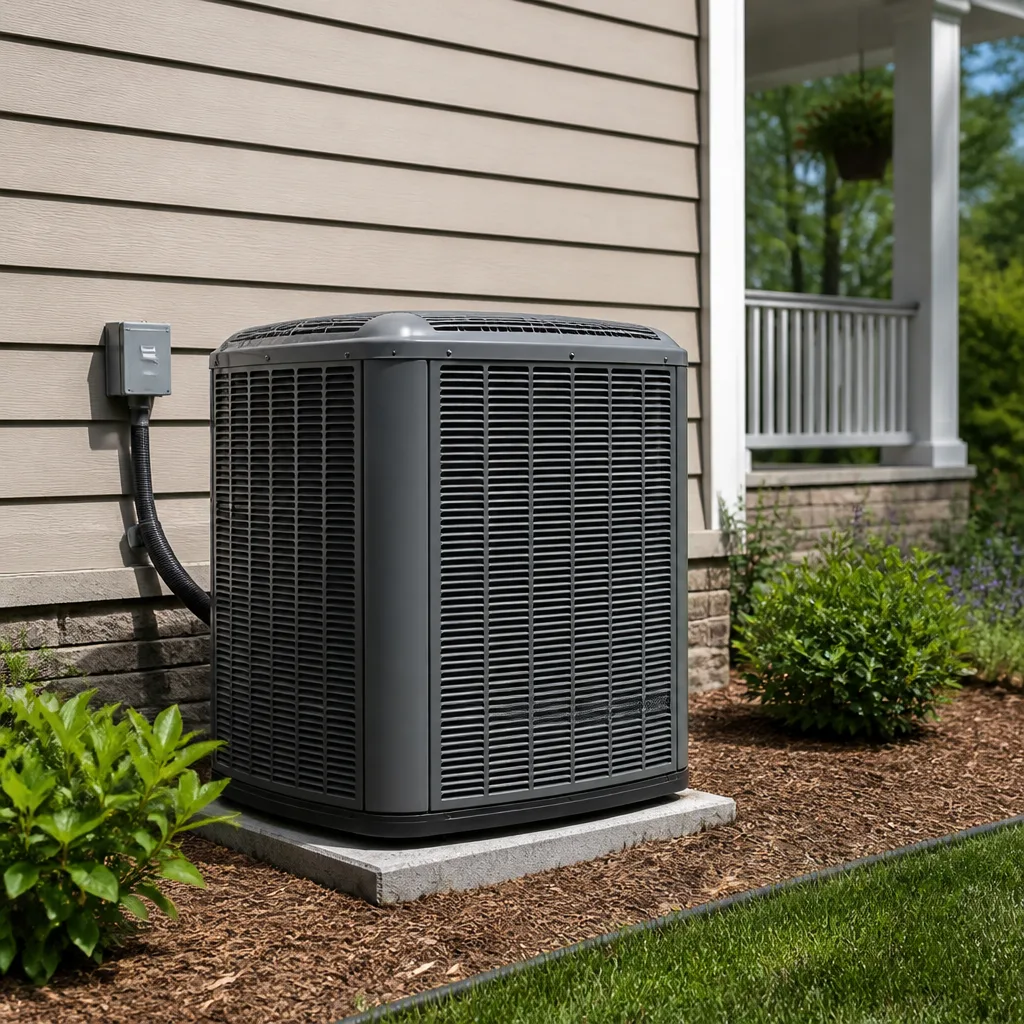 Trane
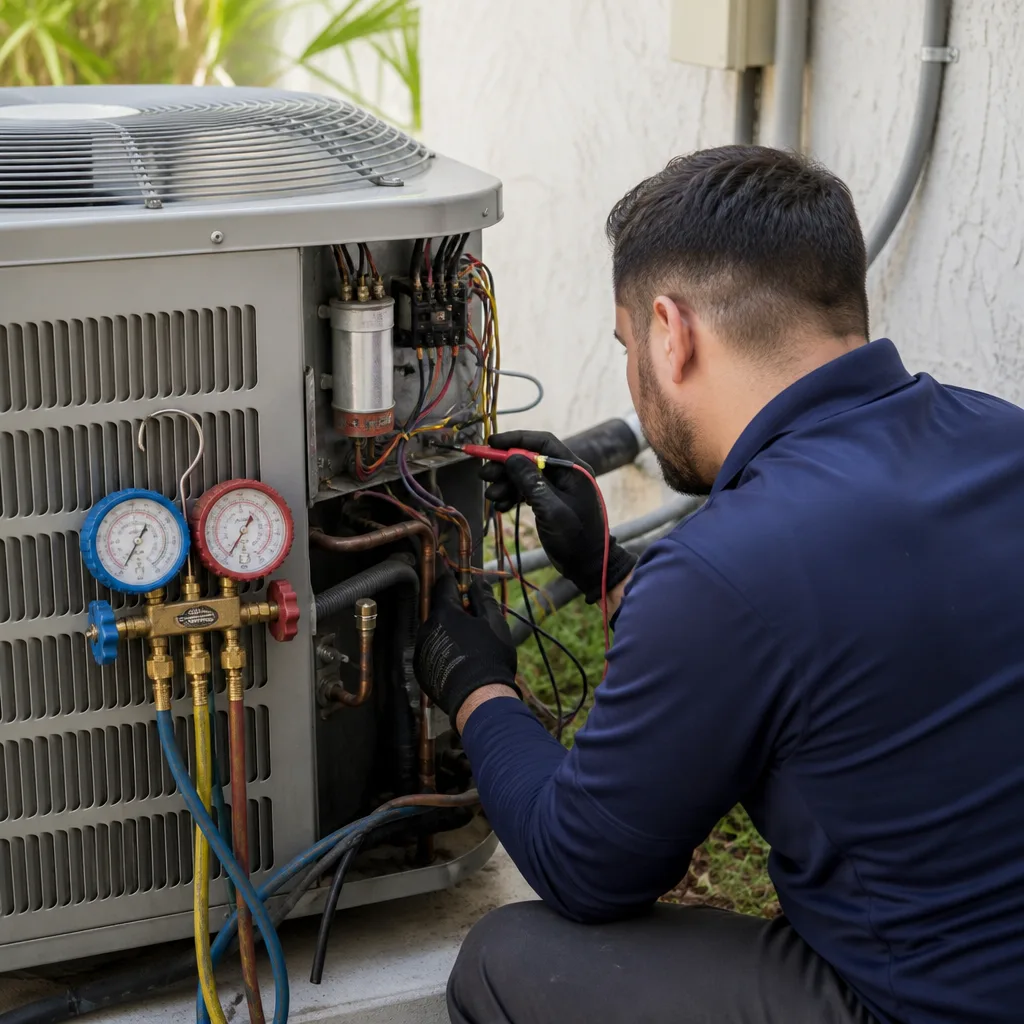
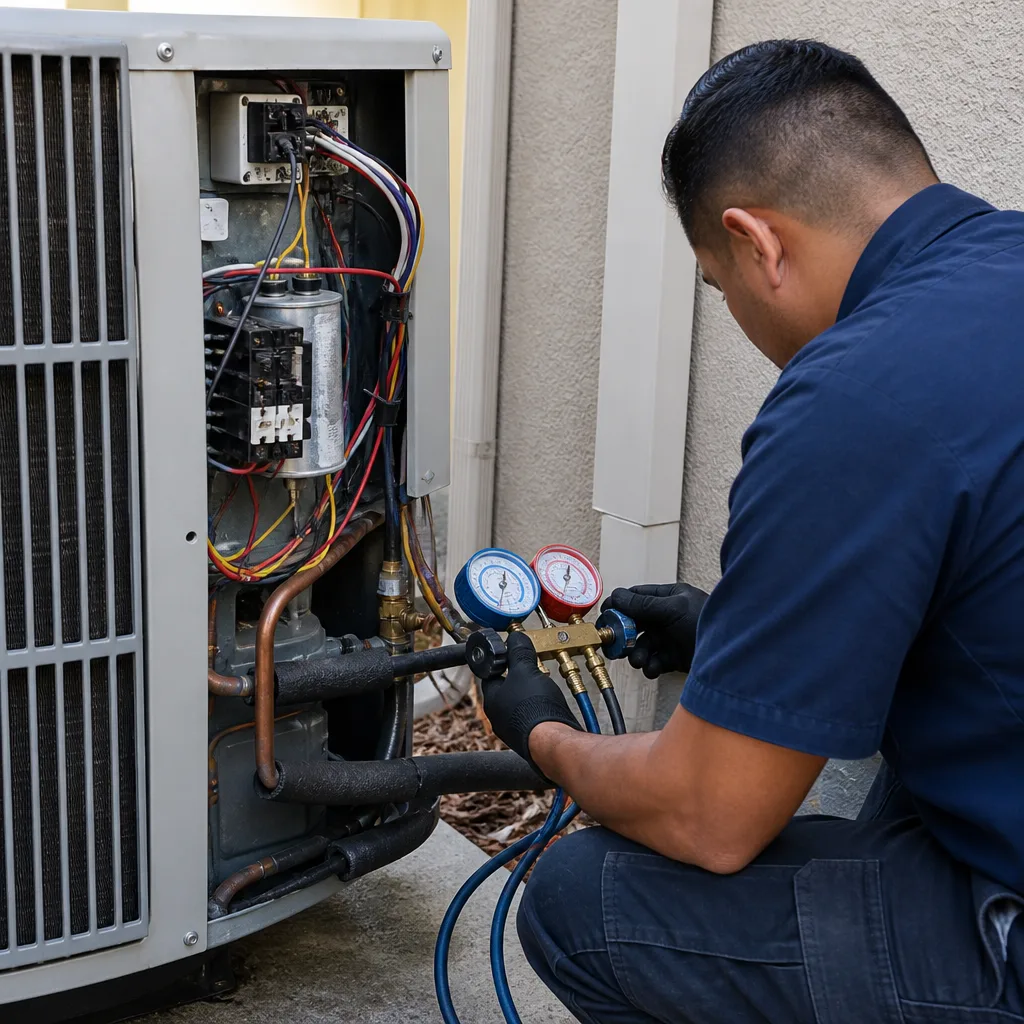
TraneSeasonal tune-up and full diagnostic on your Carrier, Trane, or Goodman system - readings shown to you before any repair is proposed
Diagnosis first, numbers second - you approve the repair price before a single part goes in.
Get your free estimateThe Complete Guide to HVAC in Miami
The average Miami air conditioner runs roughly 3,000 hours per year. That’s more than double what the same unit would log in Denver or Chicago. The reason isn’t just heat. It’s the combination of salt air, 90% plus relative humidity, and a cooling season that never really ends. A unit that lasts 15 years up north can be worn out in 8 years on Brickell Avenue. This guide explains why Miami HVAC is its own engineering problem, what that means for your system, and how to make smart decisions about repair and replacement. You’ll learn what actually matters here: moisture removal, corrosion resistance, the right equipment for your housing type, and what code says about living in a hurricane zone. If you own a home in Miami, this is the operating manual nobody handed you at closing.
Styles & brands we work with
Quick Answer
HVAC in Miami is defined by three forces: year-round runtime, extreme humidity, and salt air. The right system for a Miami home is one with a two-stage or variable-speed compressor, a coil designed to resist corrosion if you live within five miles of the coast, and a dedicated focus on dehumidification rather than raw temperature drop. Repairs on a Miami AC typically run $150 to $450 for common part failures, and full replacements start around $6,500 for smaller single-stage systems. The biggest mistake Miami homeowners make is replacing equipment with the same single-stage, builder-grade unit that just failed, simply because it’s the cheapest quote. For a deeper look at this decision, see our DIY vs Professional HVAC: The Miami Homeowner’s Decision Guide.
Table of Contents
- Why Miami Is a Different Kind of HVAC Environment
- Latent Heat vs. Sensible Heat: The Humidity Problem No One Explains
- Salt Air and Your Condenser Coil: What Actually Happens Within 5 Miles of the Coast
- Miami-Dade High-Velocity Hurricane Zone: What Code Requires
- Equipment Types, Explained Plainly: Splits, Package Units, and Mini-Splits
- Why Single-Stage Units Struggle in Miami: Compressor Staging and Partial Loads
- Which Brands Hold Up in South Florida, and What We Actually Service
- Repair or Replace: A Decision Framework for Miami Homeowners
- Common Mistakes to Avoid
- When to Call a Professional
- Frequently Asked Questions
- The Bottom Line
Why Miami Is a Different Kind of HVAC Environment
Most HVAC guides are written for a generic American house. They assume a furnace matters, that winter is a real season, and that the AC gets a break from October to April. None of that holds in Miami-Dade County. Here, the cooling system is the most important mechanical system in the house. It runs in January. It runs at 2 a.m. in July. It runs after a thunderstorm when the air outside is 88 degrees and saturated with moisture. The design conditions for Miami are 91 degrees dry bulb and 79 degrees wet bulb, which means engineers account for humidity that would swamp a system sized for Atlanta or Houston. That wet bulb number is the key. It’s not just the temperature. It’s how much water is suspended in the air, and removing that water is mechanical work, not a side effect of blowing cold air.
We work on systems all over Miami, from older homes in Shenandoah and Silver Bluff to high-rise condos in Edgewater. The failure patterns don’t vary much by neighborhood. They vary by two things: how close the building is to the water, and how well the system was sized and installed in the first place. A properly sized, properly installed system in a 1950s Coral Gables home can outlast a newer system in a waterfront condo if the coastal unit was set on a slab-facing concrete pad with no corrosion protection. Miami doesn’t reward the newest equipment. It rewards the right equipment, installed to a standard that assumes the harshest conditions are the normal conditions.
Latent Heat vs. Sensible Heat: The Humidity Problem No One Explains
Air conditioning does two things at once. It cools the air, which is called sensible heat removal. And it pulls moisture out of the air, which is called latent heat removal. Most of the country only cares about the first one. In Miami, the latent load is the bigger job on most days. Here’s the plain version: when your thermostat reads 74 degrees but the air feels sticky, your system is winning the temperature battle and losing the moisture battle. That’s not a comfort issue. It’s a mold issue. Mold starts to grow on surfaces when relative humidity stays above 60 percent for sustained periods. A system that can’t get humidity below 55 percent at 74 degrees is creating conditions for mold inside walls, closets, and HVAC ductwork, even though the thermostat says everything is fine.
This is why the cheapest system on a quote often becomes the most expensive system over five years. A single-stage unit that is slightly oversized will cool the air fast and shut off. That short runtime means it never runs long enough to pull moisture out. The result is a cold, clammy house that feels like a walk-in cooler. The fix is either a smaller system that runs longer, or a multi-stage system that can run at partial capacity for longer periods, or a dedicated whole-home dehumidifier installed in the ductwork. We specify options based on the home’s construction. A 1960s concrete block house in Westchester with original jalousie windows leaks air differently than a sealed 2015 townhouse in Doral. Both need dehumidification, but the approaches differ.
Salt Air and Your Condenser Coil: What Actually Happens Within 5 Miles of the Coast
Salt air is the slow killer of HVAC equipment in Miami. The condenser coil, the part that sits outside and rejects heat, is made of aluminum fins wrapped around copper tubing. It’s designed to shed heat, not to withstand a constant mist of salt. Within five miles of the coastline, airborne salt settles on the fins and begins eating through the aluminum. The first sign is usually a system that’s losing capacity, the house takes longer to cool, the electric bill creeps up. By the time the fins are visibly crumbling, the coil is done and the repair cost approaches replacement territory.
There are two ways to fight this. The first is coil coatings. Epoxy coatings have been around for decades and work well as a barrier, but they add some thermal resistance and can crack over time. Polymer coatings are newer, thinner, and hold up better against salt spray and UV exposure without meaningfully affecting heat transfer. The second line of defense is maintenance. A coil that gets rinsed every quarter loses less metal than a coil that never gets cleaned. The salt doesn’t just sit there, it concentrates when the coil gets wet and dries repeatedly. Rinsing the coil at the right intervals breaks that cycle. If you live in Key Biscayne, Brickell, Edgewater, or anywhere east of US-1, coil protection is not an upsell. It’s the difference between a 7-year system and a 12-year system.
We see coil failure patterns repeat themselves in buildings less than 500 yards from the bay. One building on Brickell Key went through three condenser coil replacements in nine years on units that were otherwise fine, because the original equipment spec’d a bare aluminum coil. The replacement coils got a polymer treatment. Problem solved for a third of the cost of new equipment.
Miami-Dade High-Velocity Hurricane Zone: What Code Requires
Miami-Dade County sits inside a special designation called the High-Velocity Hurricane Zone, or HVHZ 1. It’s one of the strictest building codes in the country for wind resistance, and it applies to HVAC installations too, not just roofs and windows. Any outdoor condensing unit installed in Miami must be anchored to withstand wind loads that would not even be considered in most of the U.S. That means specific tie-down straps or bolts, minimum mounting pad requirements, and electrical disconnects rated for the conditions. The code also governs how equipment is placed on rooftops and balconies in high-rise buildings.
The practical implication for a homeowner is straightforward: this is not a job for a handyman or a side-work technician. An outdoor unit that isn’t properly anchored becomes a projectile in a Category 3 storm. It can destroy the unit itself and damage whatever it hits. A proper installation in Miami includes an engineered pad for ground-level equipment, corrosion-resistant hardware, and an electrical disconnect that’s accessible and code-compliant. When we install equipment in Miami, the anchoring and disconnect work is done to the HVHZ standard, in writing, as part of the job. No upgrade, no separate line item, no negotiation.
Equipment Types, Explained Plainly: Splits, Package Units, and Mini-Splits
There are three common residential HVAC configurations in Miami, and each one fits a different housing type. A split system is the most common in single-family homes. The condensing unit sits outside on a pad, and the evaporator coil and blower sit inside, usually in a closet, attic, or garage. The two halves are connected by refrigerant lines. Split systems dominate in Coral Gables, Pinecrest, Palmetto Bay, and the older single-family neighborhoods.
A packaged unit, also called a package unit or rooftop unit, combines everything into one metal cabinet that sits outside, either on the ground or on the roof. All the components, compressor, condenser, evaporator, blower, are in one box. Package units are common in Miami-Dade because they work well for homes built on slabs with no attic or closet space for an indoor unit. You’ll see them a lot in Kendall, Cutler Bay, and the ranch-style homes that dominate the western suburbs.
A mini-split, sometimes called a ductless system, pairs an outdoor condensing unit with one or more wall-mounted indoor units connected by refrigerant lines instead of ductwork. Mini-splits are the right answer for additions, garage conversions, older homes where running ducts would mean tearing out ceilings, and for zoning where one room needs different conditions than the rest of the house. They’re also common in condos where the building’s central chilled water system doesn’t serve a particular unit well. Each type has tradeoffs on cost, efficiency, and serviceability. The right choice is about your house, not about the manufacturer’s brochure.
Why Single-Stage Units Struggle in Miami: Compressor Staging and Partial Loads
A single-stage compressor has two settings: on at full speed, or off. A two-stage compressor adds a middle setting, roughly 60 percent capacity. A variable-speed compressor can ramp anywhere from about 25 percent to 100 percent and hold at whatever level the house requires. Here’s why this matters in Miami more than anywhere else. The hottest hour of the hottest day in August is the peak load. Your system has to be sized for that, because undersizing it means a house that won’t hit set point when you need it most. But most of the year, the actual load is well below peak. Morning, evening, overcast days, January afternoons, all of those are partial-load conditions.
A single-stage unit cycles on and off to meet partial loads. That’s inefficient, it’s hard on the compressor, and it creates temperature swings of three to four degrees. A two-stage or variable-speed system can run continuously at a lower speed. That longer runtime pulls more moisture out of the air, holds a steadier temperature, and uses less electricity than cycling on and off at full blast. In our experience, Miami homeowners who switch from single-stage to two-stage equipment report two things: lower summer electric bills and a house that finally stops feeling sticky at 74 degrees. The equipment costs more upfront. Over an 8 to 10 year service life in this climate, it earns the difference back.
Which Brands Hold Up in South Florida, and What We Actually Service
The brand conversation matters less than the installation conversation. A good brand installed poorly will fail faster than a mid-tier brand installed carefully. That said, some manufacturers have invested more in the things Miami demands, like corrosion-resistant coil options and better dehumidification controls. Our technicians are factory-trained to service nine major residential brands: Carrier, Trane, Lennox, Goodman, Rheem, York, Daikin, Bryant, and American Standard. We see all of them in the field. York’s coastal coil options are popular in high-rise condos near the water. Bryant and American Standard both offer strong two-stage and variable-speed options at a price point that works for single-family homes across Miami-Dade. Daikin’s inverter-driven mini-split lines are common in conversions and additions.
What we don’t do is push whatever is on the truck. A replacement quote should explain why a specific brand and model was selected for your house, your distance from the coast, and your ductwork. If a company can’t explain the selection, the selection was probably about margin, not about your house. That’s not how pricing should work. In Miami, brand choice is a secondary decision to configuration choice. Get the staging right, the sizing right, and the coil protection right, then pick the manufacturer.
Repair or Replace: A Decision Framework for Miami Homeowners
Every Miami homeowner reaches this fork eventually. Here’s the framework we use when a customer asks us whether to put money into a repair or put it toward new equipment. Step one: get the factual age of the system. If the compressor is 10 years old and you’re within five miles of salt water, a compressor replacement is a coin flip on whether the coil fails next year. Step two: look at the pattern. One repair in eight years is maintenance. Three repairs in two years is a trend. Step three: do the math. If the repair costs 50 percent or more of the system’s remaining value, replacement is the better capital decision. Step four: check the efficiency. A 10 to 12 SEER unit from 2012 is leaving money on the table compared to a 16 to 18 SEER two-stage unit, especially in a climate where the system runs 3,000 hours a year.
Here’s a realistic picture. Most Miami AC repairs run $150 to $450, covering things like capacitors, contactors, fan motors, and refrigerant recharges, which means topping off the cooling fluid your system needs to reach set temperature. A compressor replacement runs $1,500 to $3,500 depending on the system. A full system replacement in Miami typically starts around $6,500 for a single-stage 14 SEER split system on an existing pad and climbs to $14,000 and up for a variable-speed system with new ductwork modifications. Those ranges are wide because Miami-Dade homes vary enormously in age, size, and access. The only way to get a real number is an on-site evaluation. We give written prices before any work starts, on every job, without exception. That’s the Dalton Heating & Air Miami home standard, and it’s the only way a quote means anything.
For specific repair costs and what to expect, see our page on AC Repair in Miami. If you’re weighing a replacement, our Heat Pump Installation in Miami guide covers equipment selection for this climate. And for the rare Miami cold snap or systems that include gas heat, check our Furnace Repair in Miami page.
Common Mistakes to Avoid
- Replacing with the same single-stage equipment because it’s the cheapest quote. A single-stage unit in Miami will cost more to operate and fail sooner than a two-stage unit, and the cheap quote doesn’t account for that.
- Ignoring humidity complaints as a comfort issue instead of a mold problem. If the house feels sticky at 74 degrees, the system isn’t doing its job, and the health implications go beyond discomfort.
- Skipping coil protection within five miles of the coast. A bare aluminum condenser coil near salt air is a scheduled failure. The question is when, not if.
- Letting a handyman install or service equipment in a hurricane zone. Miami-Dade HVHZ anchoring requirements are legal code, not suggestions, and a bad installation creates a projectile in a storm.
- Oversizing the system because “bigger means colder.” An oversized system short-cycles, which means poor dehumidification and premature equipment failure. Sizing is an engineering calculation, not a guess.
- Waiting until the system fails in August to think about replacement. August is when every HVAC company in Miami is running at capacity. Replacing a system on your schedule, not the weather’s, gets you a better job.
- Not asking for written pricing before the work starts. If a company won’t put the price in writing before touching your system, walk away. In Miami, that’s the first sign of a contractor who changes the number at the door.
When to Call a Professional
Some calls are clear. If the system is running but the house isn’t cooling, that’s a call. If you hear grinding, buzzing, or knocking from the outdoor unit, that’s a call. If the breaker trips more than once, that’s a call, not a reset-and-forget situation. If you see ice on the refrigerant lines or the indoor coil, turn the system off and call. That ice means the system is starving for refrigerant or airflow, and running it will destroy the compressor. If you smell something burning from the vents, call immediately and cut power at the breaker. Electrical failures inside an air handler are a fire risk, not a maintenance item. Dalton Heating & Air Miami offers free estimates in Miami, call (850) 754-6042. Our technicians are background-checked and uniformed, and every job gets a written price before work begins. You’ll know who is coming before they arrive.
Frequently Asked Questions
In Miami’s climate, a well-maintained air conditioner typically lasts 8 to 12 years, compared to 15 to 20 years in cooler climates. The combination of 3,000 annual runtime hours and salt air exposure shortens equipment life significantly. Regular maintenance and coastal coil protection can extend that window.
A new HVAC system in Miami typically runs from $6,500 to $14,000 or more, depending on the equipment configuration, home size, and whether ductwork needs modification. For detailed pricing factors, see our HVAC Cost Breakdown: The Miami Homeowner’s Reference for 2026. Single-stage systems start at the low end, two-stage and variable-speed systems run higher, and coastal-grade coil protection adds cost. Call (850) 754-6042 for a written, no-obligation estimate.
Your system is probably oversized or single-stage, which means it cools the air too quickly and never runs long enough to remove moisture. The fix is either a multi-stage system that runs longer at partial capacity, a properly sized replacement, or a whole-home dehumidifier. This is one of the most common complaints we hear from Miami homeowners.
No, and this is one place where Miami-Dade’s High-Velocity Hurricane Zone rules are absolute. Equipment must be anchored and connected to code, and improper installation voids warranties and creates storm hazards. A licensed professional is the only correct answer for installation and major repair work.
If the system is under 8 years old and the repair is under $450, repair usually makes sense. If it’s over 10 years old, within five miles of the coast, and facing a compressor replacement, replacement is usually the better financial decision. Get a written quote for both options and do the math with real numbers.
Yes. Our technicians are factory-trained to service Carrier, Trane, Lennox, Goodman, Rheem, York, Daikin, Bryant, and American Standard. We diagnose and repair all nine brands, and we don’t push a replacement unless the repair math says replacement is the smarter choice.
The Bottom Line
Miami is not a generic cooling market. It’s a salt air, high humidity, hurricane zone environment where the HVAC system runs more hours per year than any other region in the continental United States. The right system here has multi-stage capacity, proper sizing, and coastal corrosion protection. The right installation meets Miami-Dade HVHZ code and puts pricing in writing before any work begins. The right company shows up inside the stated window, does the job by the book, and stands behind the work for a full year. If your system isn’t performing, get it looked at before the next 90-degree stretch. Call (850) 754-6042 for a free estimate.
Written by Marco Benitez, Owner at Dalton Heating & Air Miami, serving Miami since 2003.
See the difference
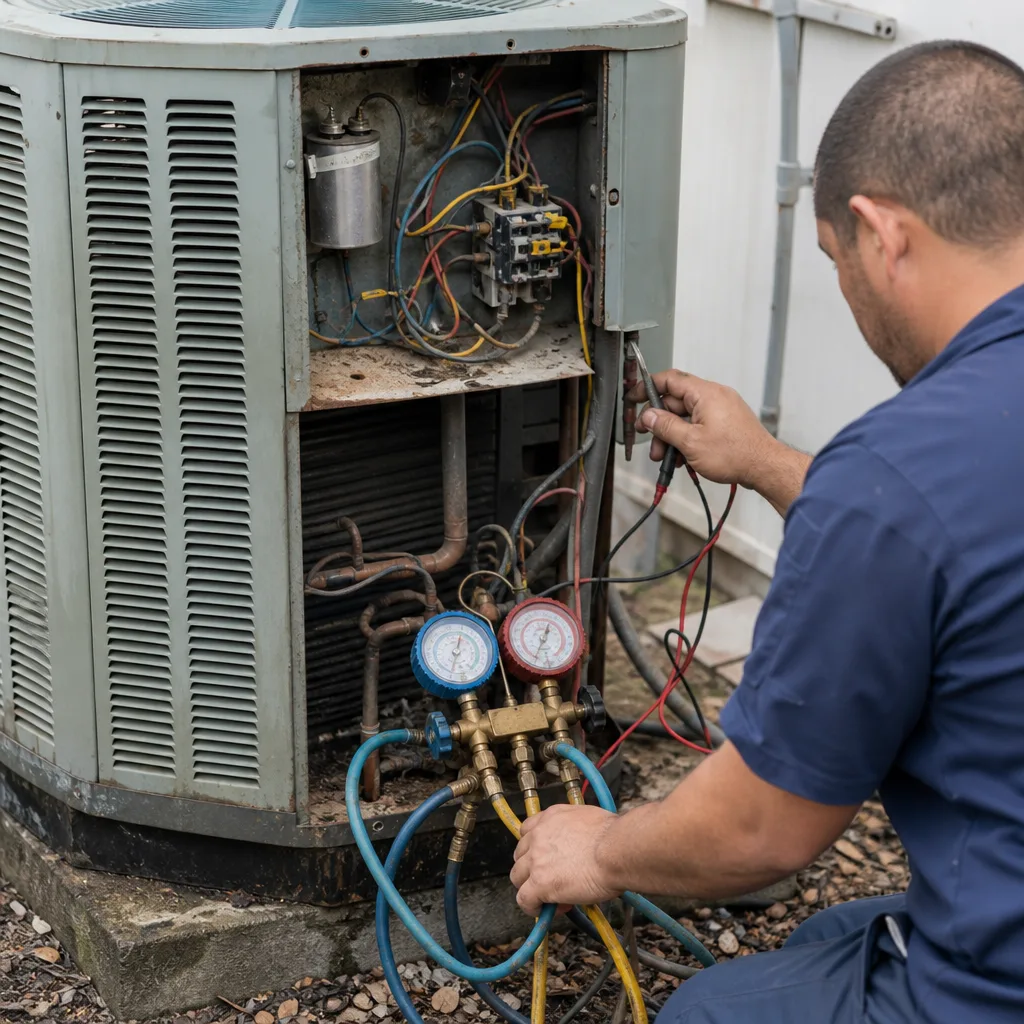 Before
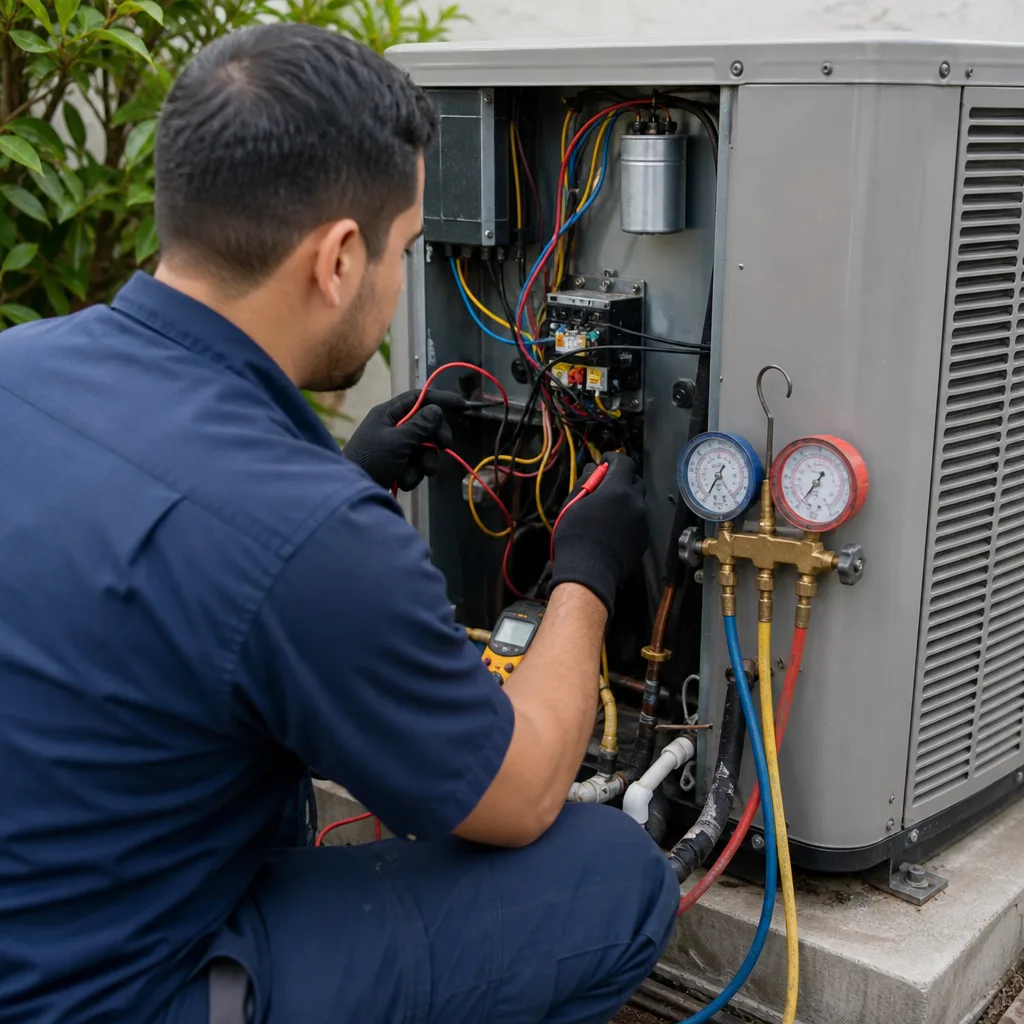 After
After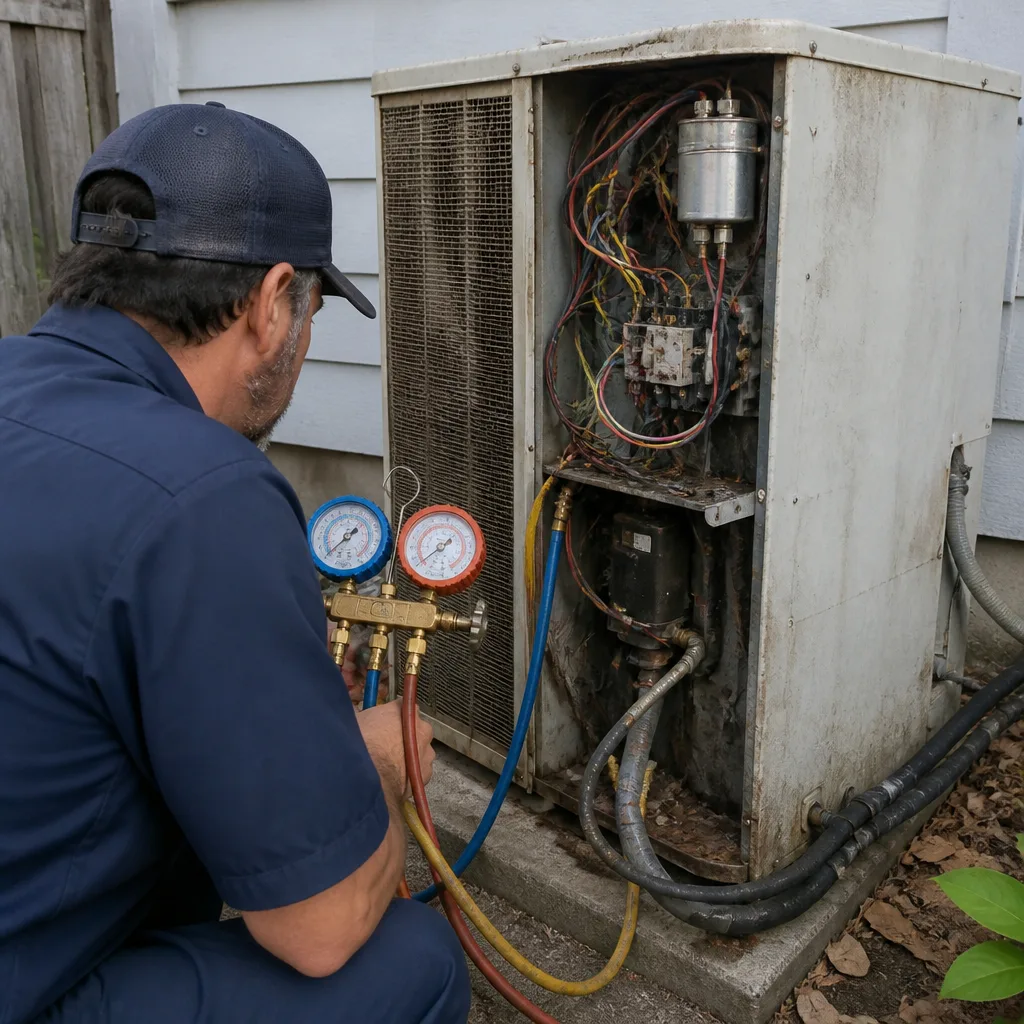 Before
 After
After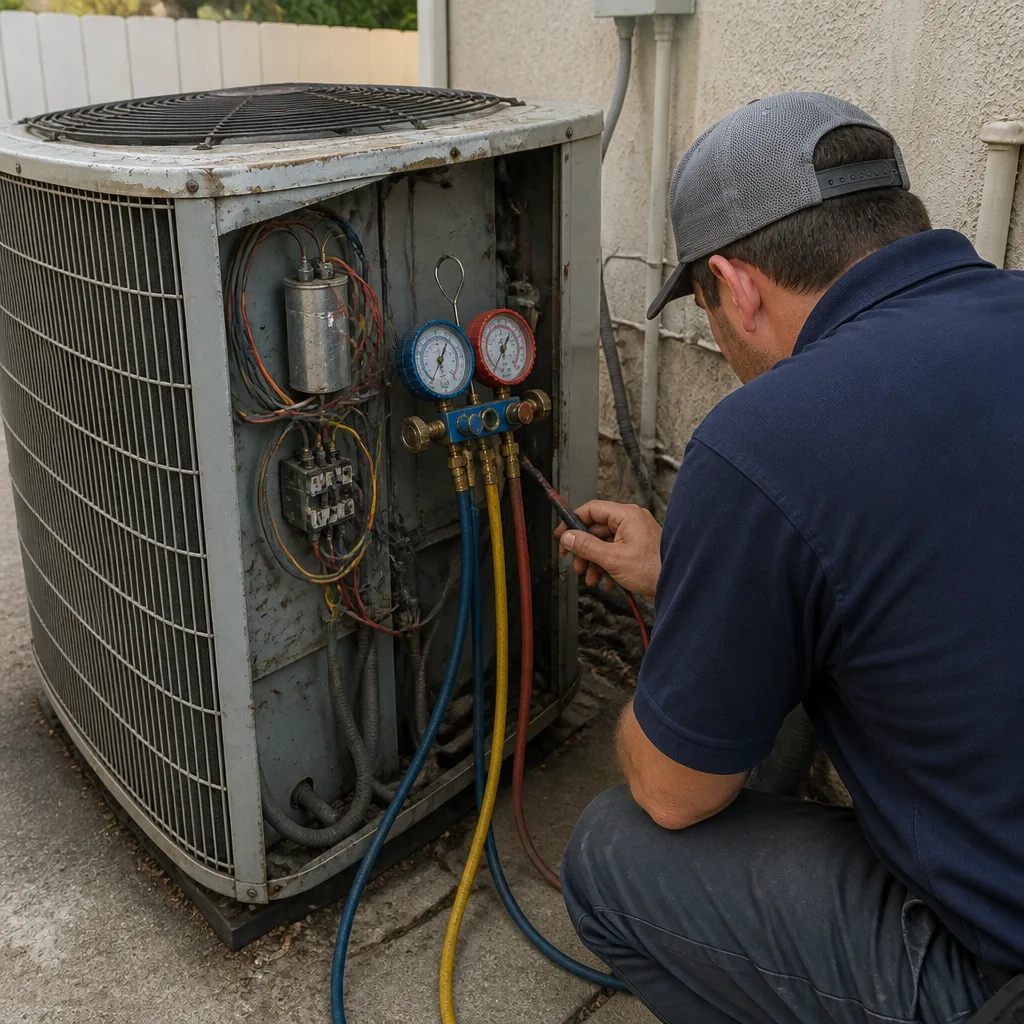 Before
 After
After