
Last updated October 16, 2026
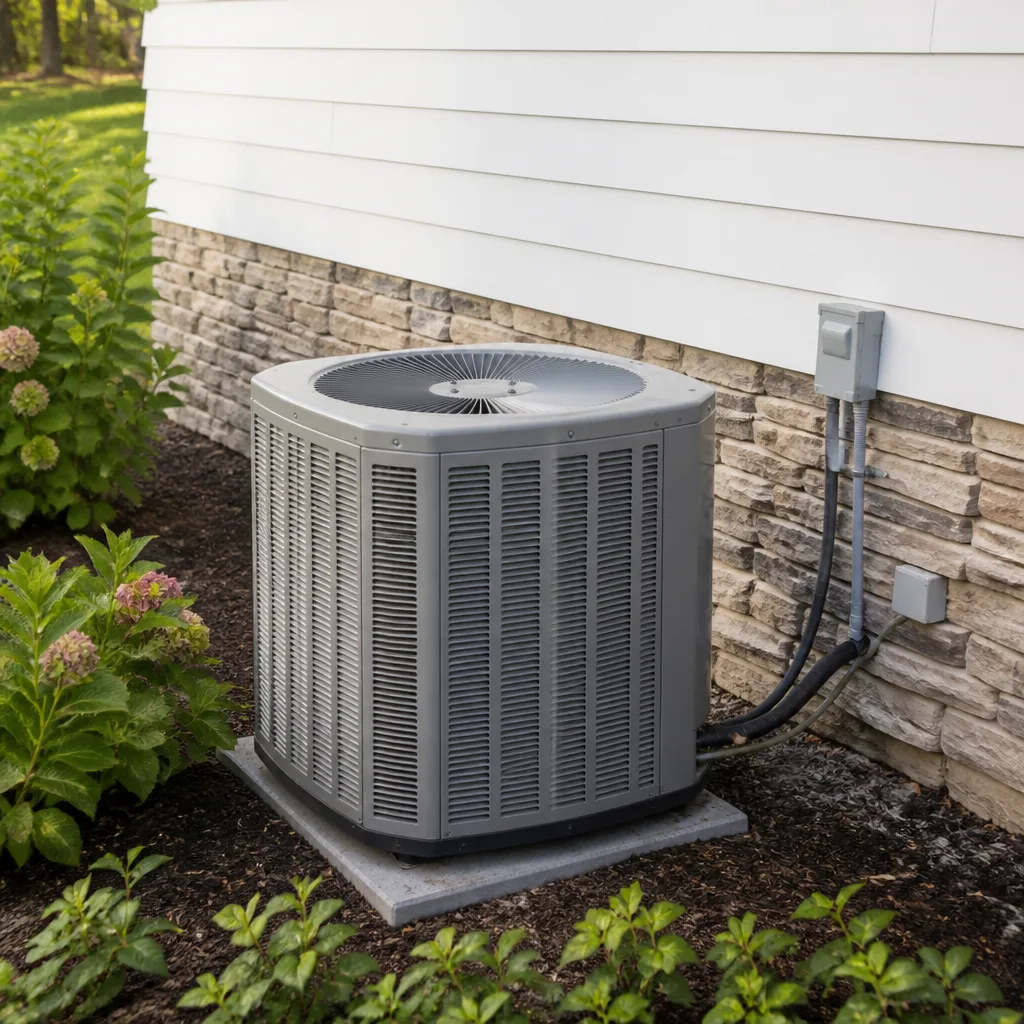 AC repair
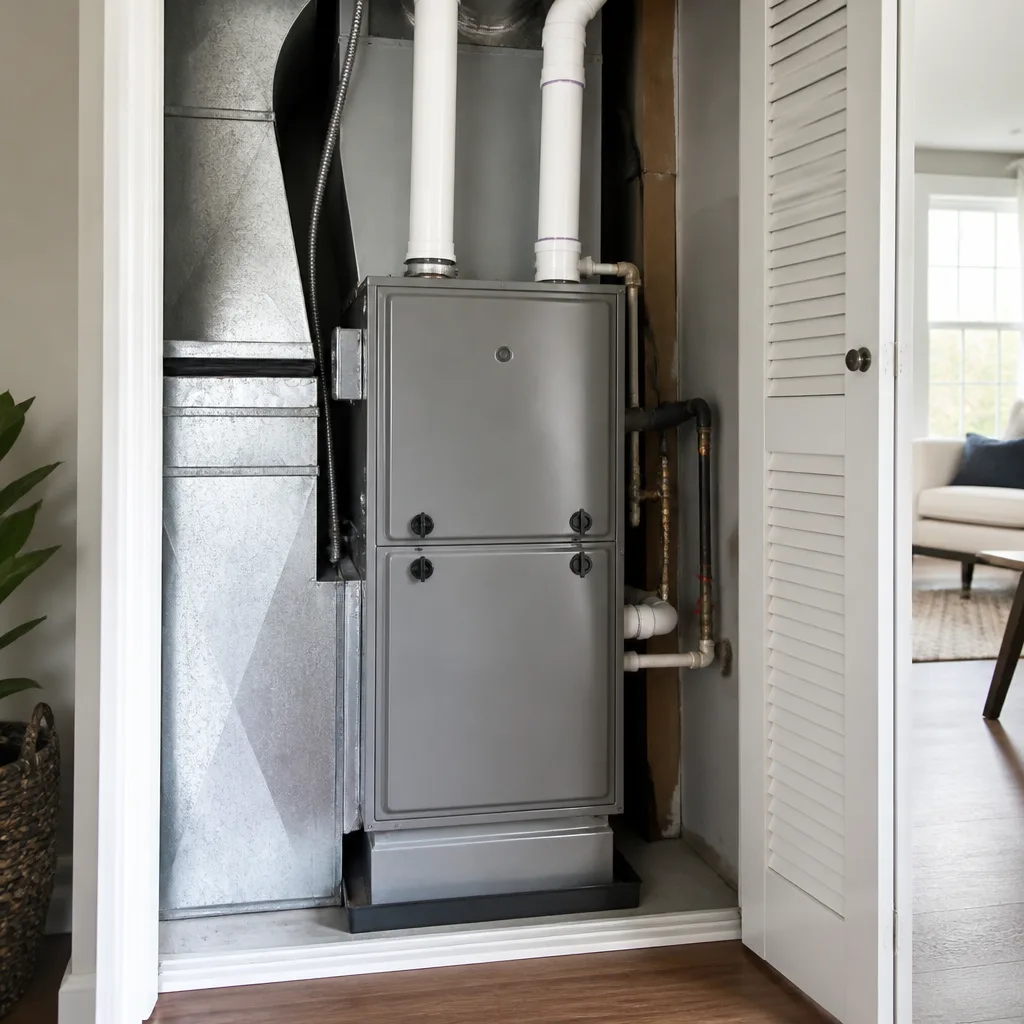 Furnace & heating
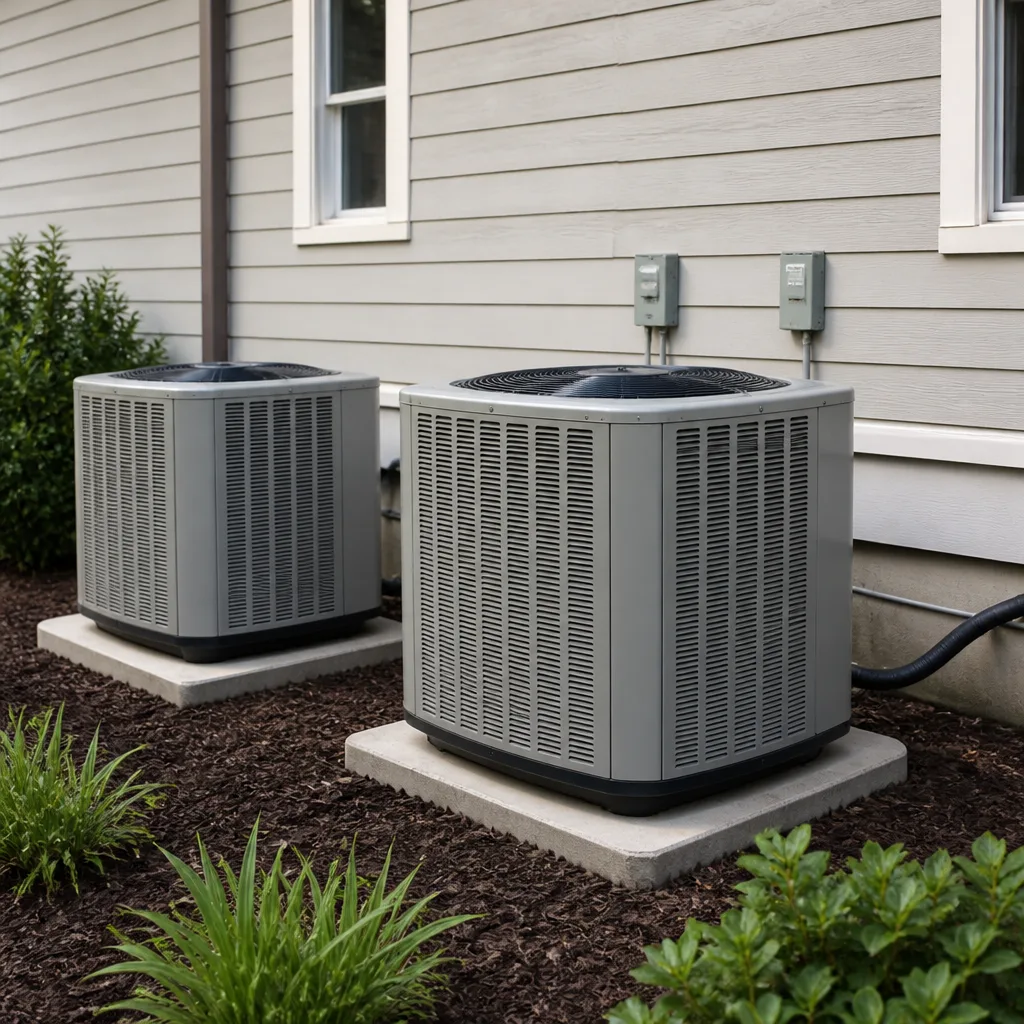 Heat pumps
 Carrier
 Trane
TraneSeasonal tune-up and full diagnostic on your Carrier, Trane, or Goodman system - readings shown to you before any repair is proposed
Diagnosis first, numbers second - you approve the repair price before a single part goes in.
Get your free estimateSeasonal HVAC Care for Miami: Year-Round Homeowner’s Guide
February is the only month in Miami when you can safely run your AC at reduced capacity, and it happens to be the best month to do the one maintenance task that requires the system to be off: a full coil inspection. Most homeowners miss this window entirely because the weather still feels like summer to anyone north of Palm Beach County. This guide maps real maintenance tasks to Miami’s actual climate calendar, not a national template that assumes autumn leaves and furnace winterization. For a deeper dive into local system fundamentals, see The Complete Guide to HVAC in Miami. You’ll learn what to do each season, why 68-degree setpoints destroy compressors in our humidity, and how to handle your system through hurricane season without ending up on an emergency call list in August.
Styles & brands we work with
Quick Answer
Seasonal HVAC care in Miami means four distinct task blocks: a March-April pre-season tune-up before peak heat arrives, disciplined thermostat and drain management from May through October, storm protocol from June through November, and a November-January period where you run the heat cycle periodically to protect the reversing valve. The single most important monthly task in Miami is checking and clearing your condensate drain line, and the single most important annual task is verifying refrigerant charge before the system gets pushed to its summer limit. If you do those two things on schedule, most emergency calls never happen.
Table of Contents
- Miami’s Real HVAC Calendar: Why National Advice Fails Here
- March – April: The Highest-Leverage Maintenance Window of the Year
- May – October: Running Cool Without Killing the Compressor
- Hurricane Season Protocol: June Through November
- November – January: The Heat-Mode Trick That Prevents a $400 Repair
- The Two Tasks That Matter More Than Everything Else Combined
- Brand-Specific Notes: What We See on Rheem, York, Daikin, and Bryant in Miami
- Common Mistakes to Avoid
- When to Call a Professional
- Frequently Asked Questions
- The Bottom Line
Miami’s Real HVAC Calendar: Why National Advice Fails Here
National HVAC guides are written for places with frost dates. Miami has no frost date. We have two actual seasons: hot-and-wet and warm-and-dry. The equipment, the failure patterns, and the maintenance schedule all follow that split. A homeowner in Minneapolis shuts the AC down in October and forgets about it until May. A Miami homeowner who tries that approach gets a compressor that shorts to ground in July because the contactor points corroded during eight months of continuous runtime.
Here’s the core issue: Miami AC systems run 2,800 to 3,400 hours per year. That’s triple what a typical northern system runs. Every component ages faster. Capacitors that last six years in Ohio last three here. Condensate drain lines that stay clean for a year in Denver clog in six weeks during Miami’s wet season. The maintenance calendar has to account for that duty cycle. What matters in Miami specifically:
- Salt air accelerates coil corrosion within roughly five miles of the coast. Coral Gables, Coconut Grove, Key Biscayne, and Miami Beach systems need coil inspections twice as often as systems west of the Palmetto Expressway.
- Humidity is the real enemy, not heat. A system running at 72 degrees in 90% humidity works harder than one running at 70 degrees in 40% humidity. The latent load, the moisture the coil has to pull out of the air, is what strains the compressor in Miami.
- Rainwater intrusion into the outdoor unit is a constant threat from May through October. Units placed on the ground without elevation in neighborhoods like Westchester or Kendall that see street flooding even in ordinary afternoon thunderstorms are at higher risk.
We’ve worked on systems across every Miami neighborhood since 2003, and the pattern is consistent: homeowners who follow a calendar built around Miami’s actual weather get 12 to 15 years from a system. Homeowners who follow generic advice get 8 to 10 and a surprise replacement bill. The Dalton Heating & Air Miami home page has more on how we approach maintenance planning for this climate, but the calendar below is the foundation.
March – April: The Highest-Leverage Maintenance Window of the Year
March and April are when Miami transitions from warm-and-dry to hot-and-wet. Humidity starts climbing in late March, and by mid-April the afternoon thunderstorms begin. This is the window to prepare the system for the beating it’s about to take. A pre-season tune-up done correctly in March prevents most of the breakdowns that fill our schedule in June and July.
What a proper Miami pre-season tune-up includes, beyond the filter change and coil rinse that every marketing flyer mentions. For a printable task list, see our AC Repair Maintenance Checklist for Miami Homeowners:
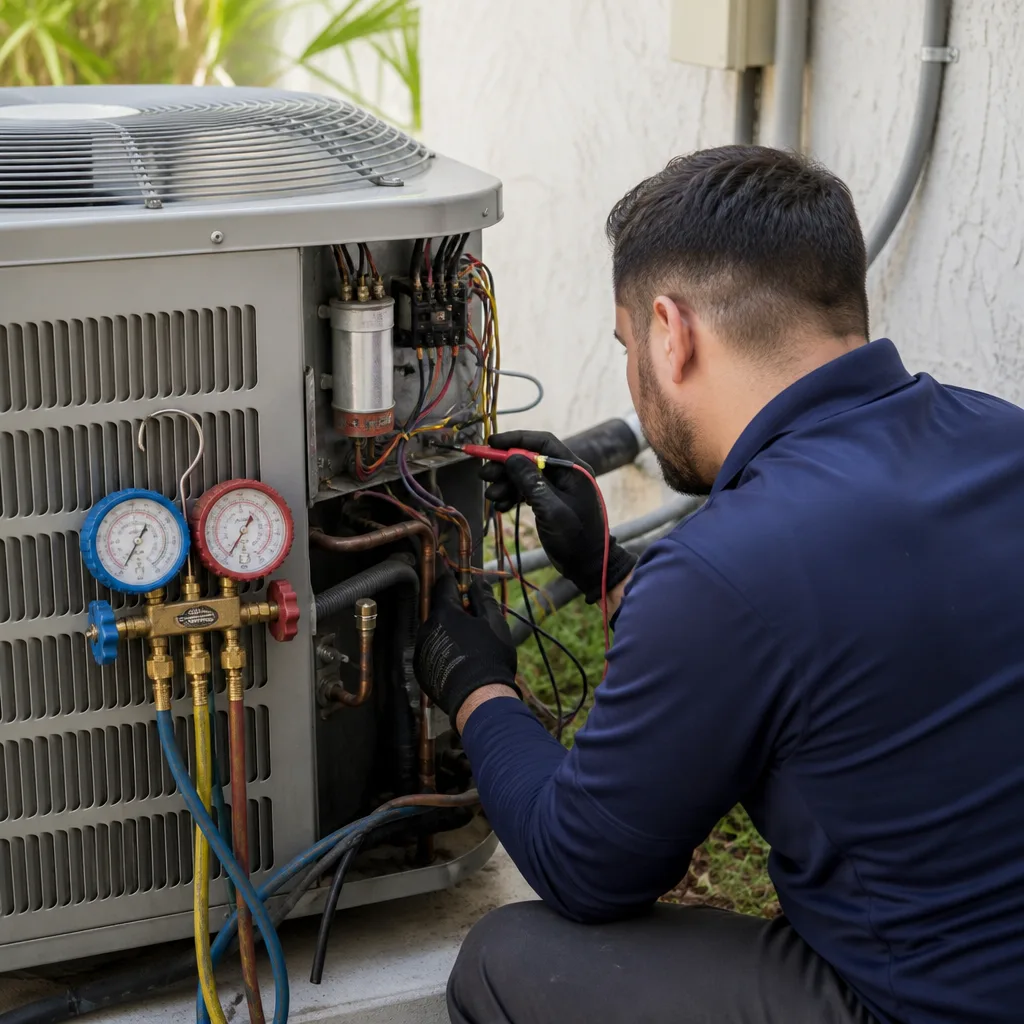
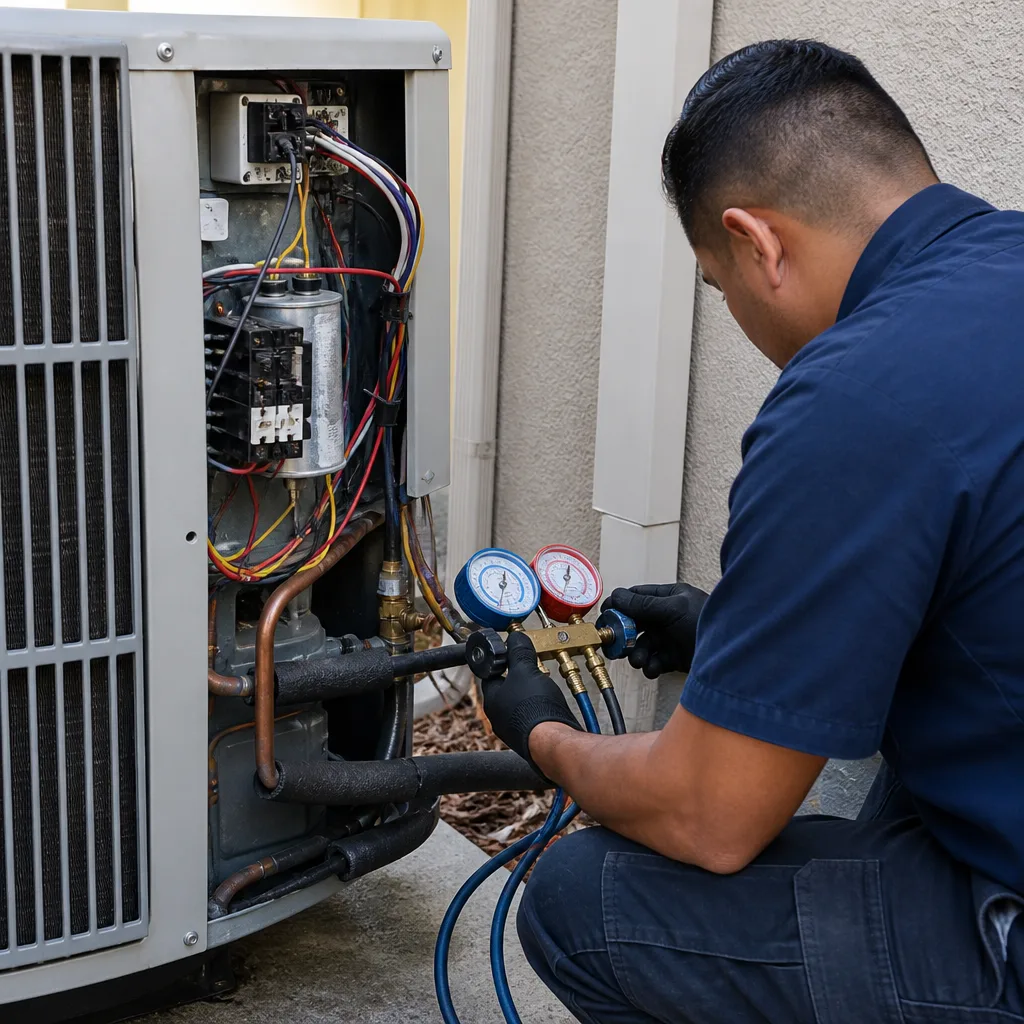
- Refrigerant charge verification. This is the big one. A system can be 15% low on refrigerant and still cool, but it’s running the compressor hotter and drawing more amperage than it should. In Miami, where the system runs constantly from May onward, a low charge discovered in March is a $200 fix. The same condition discovered in August after the compressor fails is a $3,500 replacement. Technicians measure superheat and subcooling to verify the charge; anything off by more than a few degrees gets corrected before peak season.
- Contactor inspection and replacement. The contactor is the electrical switch that turns the outdoor unit on and off. In Miami’s humidity, contactor points pit and corrode from constant cycling. A pitted contactor creates electrical resistance, which creates heat, which eventually welds the points shut or burns them open. This is the single most common cause of “my AC just stopped turning on” calls we get in Miami. A contactor costs $40 to $90 as a part. We check the points under magnification during every pre-season tune-up.
- Capacitor testing under load. Capacitors are the other high-failure component in Miami. A capacitor that reads fine on a bench test can fail under actual starting load when the outdoor unit is hot. We test them while the system is running, not just with a multimeter on a cool unit. A weak capacitor often still starts the compressor, but it runs the fan motor at reduced speed, which reduces heat rejection, which raises compressor temperature. It’s a cascade that ends in a dead compressor.
- Condensate drain line clearing and treatment. Miami’s wet season turns condensate lines into biology experiments. We clear the line, flush it, and apply a time-release treatment that keeps the line open for most of the season.
- Airflow measurement. Static pressure readings on the duct system tell you if the system is moving the right amount of air. A system moving 1,200 CFM instead of 1,600 CFM is working harder and cooling less. In older Miami homes, particularly in neighborhoods with original ductwork like parts of Kendall and West Miami, we regularly find airflow 25 to 30% below spec due to collapsed flex duct or dirty coils.
If you only schedule one professional maintenance visit per year, schedule it in March or April. Not in August, when you’re competing for service slots with every other homeowner whose system just died, and not in the slow winter months when a tune-up does nothing to prepare the system for what’s coming.
May – October: Running Cool Without Killing the Compressor
From May through October, your system is in a endurance race. Average daily high temperatures sit between 88°F and 92°F, and relative humidity hangs above 70% most afternoons. The system runs 12 to 16 hours a day, every day. Every setpoint decision and every maintenance shortcut compounds over those six months.
The single most damaging thing Miami homeowners do during peak season is chase a 68-degree house. Here’s the physics: a standard split system in Miami is typically sized to maintain about a 20-degree temperature differential from outdoor ambient. When it’s 95 outside, the system can hold 75 without running continuously. Ask it to hold 68, and the compressor runs nearly nonstop from noon to midnight. Continuous operation raises compressor discharge temperatures, accelerates oil breakdown, and shortens the life of the system by years. We replace compressors in Miami every week that died specifically because the homeowner ran a 68-degree setpoint through three Miami summers.
Realistic peak-season guidance for Miami:
- Set the thermostat to 76 – 78°F during occupied daytime hours and 74 – 75°F at night if you need cooler sleeping conditions. This is the band where most systems can cycle normally and still manage humidity.
- Use the “dry” or “dehumidify” mode if your thermostat has it. Running the system in dehumidify mode for 2 – 3 hours in the evening pulls moisture out at reduced airflow, which makes the house feel cooler at a higher dry-bulb temperature.
- Don’t set the system below 72°F on any day the forecast exceeds 92°F. You’re not cooling the house more effectively; you’re just running the compressor flat-out against the outdoor temperature.
- Change the filter every 30 days during peak season. Not every 90 days. A filter loaded with Miami’s humid air particles, dust, and pollen restricts airflow within three to four weeks. Restricted airflow is the fastest way to turn a routine cooling season into a frozen coil or a dead compressor.
This is also the season when an AC repair in Miami becomes a scheduling challenge. On a 94-degree day, every qualified technician in the county is booked. The best way to avoid being on that list is to handle pre-season maintenance and keep the system within a setpoint band it can actually achieve.
Hurricane Season Protocol: June Through November
Hurricane season runs June 1 through November 30, and every Miami homeowner needs a plan for the HVAC system specifically. The two biggest risks are storm surge or flooding around the outdoor unit, and power surges when the grid fails and restores.
Before a storm makes landfall:
- Switch the system to “off” at the thermostat, not just “cool” with a high setpoint. A system set to “cool” will try to start when temperatures rise, and if utility power is unstable, starting under low voltage or phase issues can damage the compressor. Turn it off completely.
- Shut the dedicated breakers for the outdoor unit at the electrical panel. This protects the system from surge damage when power comes back on. Utility reconnection after a hurricane often comes with voltage spikes.
- If the outdoor unit is in a flood-prone spot, consider elevating it on a pad if you have warning and the means. Even 6 to 12 inches of elevation can keep the unit out of storm surge. This is a job for a professional, but planning for it is a homeowner task.
After the storm passes:
- Do not turn the system back on until you’ve checked the outdoor unit for standing water or waterline marks. A compressor that’s been submerged in saltwater will fail, and if it hasn’t failed yet, running it with water in the electrical compartment can damage components and create a shock hazard. Waterline marks on the unit’s coil or cabinet are the tell.
- Check for debris, branches, or salt spray accumulation on the coil. Salt spray from a near-miss hurricane coats coils within a few miles of the coast. That salt accelerates aluminum corrosion dramatically. Wash it off with a gentle hose stream (not a pressure washer) once the storm passes.
- Check the disconnect box and the wiring whip from the disconnect to the unit. Hurricane winds can pull the flexible conduit loose. A loose conduit means exposed wiring, which is both a fire risk and a shock risk.
- If you had flood water reach the indoor air handler, call a professional before running the system. Water in the blower motor, control board, or electrical connections must be dried and inspected first. Running a wet air handler can short the board and turn a $300 dry-out into a $1,200 repair.
If the system smells musty when you restart it, that’s the evaporator coil holding storm moisture. A professional coil cleaning resolves it. If the system makes any unusual noise, particularly a grinding or buzzing from the outdoor unit on startup, shut it back down and call a technician. Compressors damaged by storm surge often fail within weeks of being restarted, not immediately.
November – January: The Heat-Mode Trick That Prevents a $400 Repair
Miami winters are mild, and most homeowners never switch their system to heat mode. That’s a mistake with a specific, avoidable cost attached. Heat pumps and heat pump-capable air conditioners in Miami have a reversing valve, the component that switches the system from cooling to heating. If the reversing valve sits unused for years, the internal slide can seize in the cooling position. Then, on the one cold night when you actually want heat, the valve doesn’t shift, and you’re looking at a $350 to $500 repair.
The fix is simple: run the system in heat mode for about 20 minutes once a month from November through January, even if the temperature doesn’t seem to require it. This exercises the reversing valve and keeps the internal mechanism moving. Most Miami systems will never need substantial heating, but the valve needs to move to stay functional.
A few practical notes for Miami’s winter months:
- You’ll probably run heat mode only a handful of times per winter. Miami’s average January low is around 60°F. But those three or four cold fronts that push overnight lows into the 40s are when you’ll want it, and that’s when you’ll discover whether the valve works.
- If you have a heat pump installed in the last few years, it’s designed for Miami’s mild winters. A properly sized heat pump handles a Miami cold snap without supplemental strip heat, even down to the mid-30s. Older systems may struggle below 40°F, and that’s a sign the charge or the airflow needs attention. This is also the time of year when heat pump installation in Miami becomes a topic for homeowners whose systems are aging out.
- Defrost cycle noise is normal. When a heat pump runs in heat mode on a cool morning, it may briefly switch into defrost to melt frost on the outdoor coil. You’ll hear a whoosh and see steam rising from the outdoor unit. That’s normal operation, not a failure.
- This is also the easiest season for furnace repair in Miami’s limited furnace inventory. Most Miami homes don’t have furnaces, but older homes in neighborhoods like Shenandoah or Silver Bluff with original gas lines sometimes do. If you have one, winter is when it gets its annual workout, and that’s when issues surface. Our furnace repair in Miami work picks up in December and January for exactly this reason.
Running heat mode once a month from November through January is a two-minute task that prevents a repair bill most homeowners never see coming. Do it.
The Two Tasks That Matter More Than Everything Else Combined
If you remember nothing else from this guide, remember these two tasks: the monthly condensate drain check and the annual refrigerant charge verification. In 20-plus years of working on Miami systems, these two prevent more failures than every other maintenance item combined.
The Monthly Task: Condensate Drain Check
Your system pulls several gallons of water out of Miami’s humid air every day during the wet season. That water leaving the evaporator coil travels through a condensate drain line, usually a PVC pipe that exits near the outdoor unit or ties into a plumbing drain. In Miami’s climate, that drain line grows algae and mold faster than anywhere else in the country. A clogged line means water backs up into the drain pan, which triggers the float switch, which shuts the system down. The system doesn’t just lose efficiency. It stops completely.
The monthly check takes 10 minutes:
- Locate the condensate drain line exit point. Usually a PVC pipe sticking out near the outdoor condensing unit, or a drain port inside the garage or utility closet.
- Look for water dripping from the line while the system runs. A steady drip is normal during cooling operation. No drip after 15 minutes of runtime is a warning sign of a developing clog.
- Pour one cup of white vinegar into the access point, usually a T-fitting or a cap near the indoor air handler. Vinegar controls the biological growth without damaging the PVC. Do not use bleach. Bleach corrodes the line and evaporator coil over time.
In our experience, the Miami neighborhoods with the worst condensate issues are the older ones with long horizontal drain runs. Homes in the 1950s and 1960s construction of neighborhoods like Westchester, Allapattah, and parts of Hialeah often have drain lines running 20-plus feet through attic spaces, and those are the ones that clog fastest.
The Annual Task: Refrigerant Charge Verification
Refrigerant leak in the system? The system cools less, runs longer, and the compressor runs hotter. A 10% undercharge is enough to measurably shorten compressor lifespan. A 25% undercharge is enough to ice the coil and kill the compressor within a season.
Charge verification is not a DIY task. It requires gauges, a thermometer, and the manufacturer’s superheat and subcooling charts for that specific model. But scheduling it once a year, ideally in March or April before peak season starts, is a homeowner task. The procedure takes about 30 minutes, and a technician charging by the book checks superheat or subcooling against spec, not just “looks like the pressures are fine.”
Systems lose a small amount of refrigerant over time even without a leak, through microscopic seepage at the service valves. Verify the charge annually, correct it if it’s off, and the system holds its efficiency and lifespan. Skip it, and you’ll find out about the slow leak in July when the system can’t hold temperature.
Brand-Specific Notes: What We See on Rheem, York, Daikin, and Bryant in Miami
Dalton Heating & Air Miami services all nine major residential HVAC brands, which means we see the same failure patterns across thousands of local systems. Here’s what Miami homeowners should know about the common brands we work on most.
Rheem and York systems in Miami tend to be robust on the compressor side but sensitive to condenser coil corrosion, particularly within a few miles of the coast. We regularly see Rheem and York units in Coconut Grove and Coral Gables that need coil replacement or major coil repair at the 8 to 10 year mark, even when the compressor is still running strong. The fix for coastal installations is either a coastal-coated coil or more frequent coil cleaning and inspection. If you have a Rheem or York system near the water, twice-annual coil inspection is not overkill.
Daikin systems run quieter than most competing brands and their inverter-driven compressors handle partial-load operation well, which suits Miami’s shoulder seasons. The failure point we see locally on Daikin is in the control electronics, specifically the inverter boards, particularly in homes that experience frequent power fluctuations. A whole-home surge protector is a worthwhile add-on for any Miami system, but it’s especially valuable on inverter-driven equipment like Daikin and Bryant’s variable-speed lines.
Bryant systems are pervasive in Miami’s spec-built homes from the early 2000s through the 2010s. Those systems are now aging out, and we see a lot of capacitor and contactor failures on 10 to 14-year-old Bryant units. The good news is those are inexpensive parts. The bad news is many of those systems were sized at the very bottom edge of what the house needs, so once they start losing capacity from age, they struggle to hold temperature on 90-plus degree days.
The brand matters less than the maintenance. A well-maintained Bryant system from a volume builder outlasts a neglected premium system every time. But the failure patterns differ by brand, and knowing what to watch for on your specific equipment is useful.
Common Mistakes to Avoid
- Skipping the March-April tune-up because “the system is working fine.” The systems that fail in July are the ones that worked fine in March. The purpose of pre-season maintenance is to catch the conditions that will fail under peak-season load. A system can run acceptably with a weak capacitor or a low charge in mild weather and eat itself alive in August.
- Running a 68-degree setpoint through a Miami summer. This is the most expensive thermostat decision Miami homeowners make. It doesn’t just raise the electric bill. It measurably shortens compressor lifespan by running discharge temperatures at the upper limit for months on end.
- Pouring bleach down the condensate drain line. Bleach solves the immediate clog but attacks the PVC and the evaporator coil, creating pinhole leaks and corrosion over time. White vinegar does the same job without the damage.
- Restarting the system after a hurricane without checking the outdoor unit. If the unit sat in saltwater or storm surge, restarting it can destroy the compressor and create an electrical hazard. Check for waterline marks and debris first. Salt spray on the coil should be rinsed off before the system runs.
- Ignoring heat mode entirely in winter. A reversing valve that sits unused for years will seize. Running heat mode for 20 minutes once a month from November through January keeps the valve functional and costs almost nothing.
- Changing the filter on a national 90-day schedule. Miami’s dust, humidity, and near-continuous runtime load filters faster than national advice accounts for. A 90-day filter in Miami looks like a 30-day filter in most of the country. Check it monthly and change it when it’s visibly loaded.
When to Call a Professional
Some maintenance tasks are homeowner work: changing filters, pouring vinegar down the drain line, watching for waterline marks after a storm. Others require tools, training, and gauges. Call a professional when the system is short-cycling (turning on and off every few minutes), when the outdoor unit makes a buzzing sound that doesn’t turn into normal running, when you see ice on the refrigerant lines or the indoor coil, when the breaker for the outdoor unit trips, or when the system runs but can’t hold more than a 15-degree differential from outdoor temperature. These are symptoms of conditions that will not resolve on their own. Dalton Heating & Air Miami offers free estimates in Miami, and a technician can usually diagnose the issue in under an hour. Call (850) 754-6042 to schedule.
Frequently Asked Questions
Twice per year is ideal for Miami’s duty cycle: a full tune-up in March or April before peak season, and a light inspection in September or October after the worst of the heat and humidity. The spring visit should include refrigerant charge verification, contactor and capacitor inspection, coil cleaning, and drain treatment. The fall visit can be shorter, focused on what the summer exposed.
For most Miami systems, 76 to 78 degrees during the day and 74 to 75 degrees at night is the realistic band that balances comfort with equipment longevity. Setting the system below 72 on a 95-degree day forces the compressor into near-continuous operation, which raises internal temperatures and shortens lifespan. If 76 feels too warm, run the dehumidify mode for a couple of hours in the evening; drier air feels cooler at the same temperature.
Yes. Switch the system off at the thermostat and shut the dedicated breakers for the HVAC equipment at the panel. This protects the system from voltage spikes during power restoration and prevents the compressor from attempting starts during unstable grid conditions. After the storm passes, check the outdoor unit for flooding, debris, and coil contamination before restoring power.
Miami’s combination of heat, humidity, and year-round biological activity means condensate drain lines grow algae and mold faster here than in drier climates. A line that stays clean for a year in most of the country clogs within a month or two during Miami’s wet season. Monthly vinegar flushes and an annual professional drain treatment keep the line open.
You don’t need it for warmth most years, but you do need to exercise the reversing valve. Running heat mode for 20 minutes once a month from November through January keeps the valve from seizing, which prevents a repair bill when you eventually do want heat on a cold night.
A well-maintained system in Miami typically lasts 12 to 15 years. A neglected system here lasts 8 to 10. The salt air near the coast, the near-continuous summer duty cycle, and the humidity all work against equipment lifespan. The annual refrigerant check and monthly drain maintenance are the two highest-leverage habits for stretching system life. Call (850) 754-6042 to schedule a pre-season tune-up before the heat arrives.
The Bottom Line
Miami’s HVAC calendar has four blocks: pre-season prep in March and April, disciplined operation from May through October, storm protocol from June through November, and heat-mode exercise from November through January. The homeowner tasks are manageable: change filters monthly during peak season, flush the condensate drain with vinegar, run heat mode once a month in winter, and check the outdoor unit after every storm. The professional tasks matter more: refrigerant charge verification in spring, contactor and capacitor inspection, and a proper pre-season coil cleaning. Do the homeowner tasks on schedule and one thorough professional tune-up in March or April, and you’ll avoid the August emergency call that every Miami homeowner dreads. For more guides & resources on keeping your system running, explore our blog.
Written by Marco Benitez, Owner at Dalton Heating & Air Miami, serving Miami since 2003.
See the difference
 Before
 After
After Before
 After
After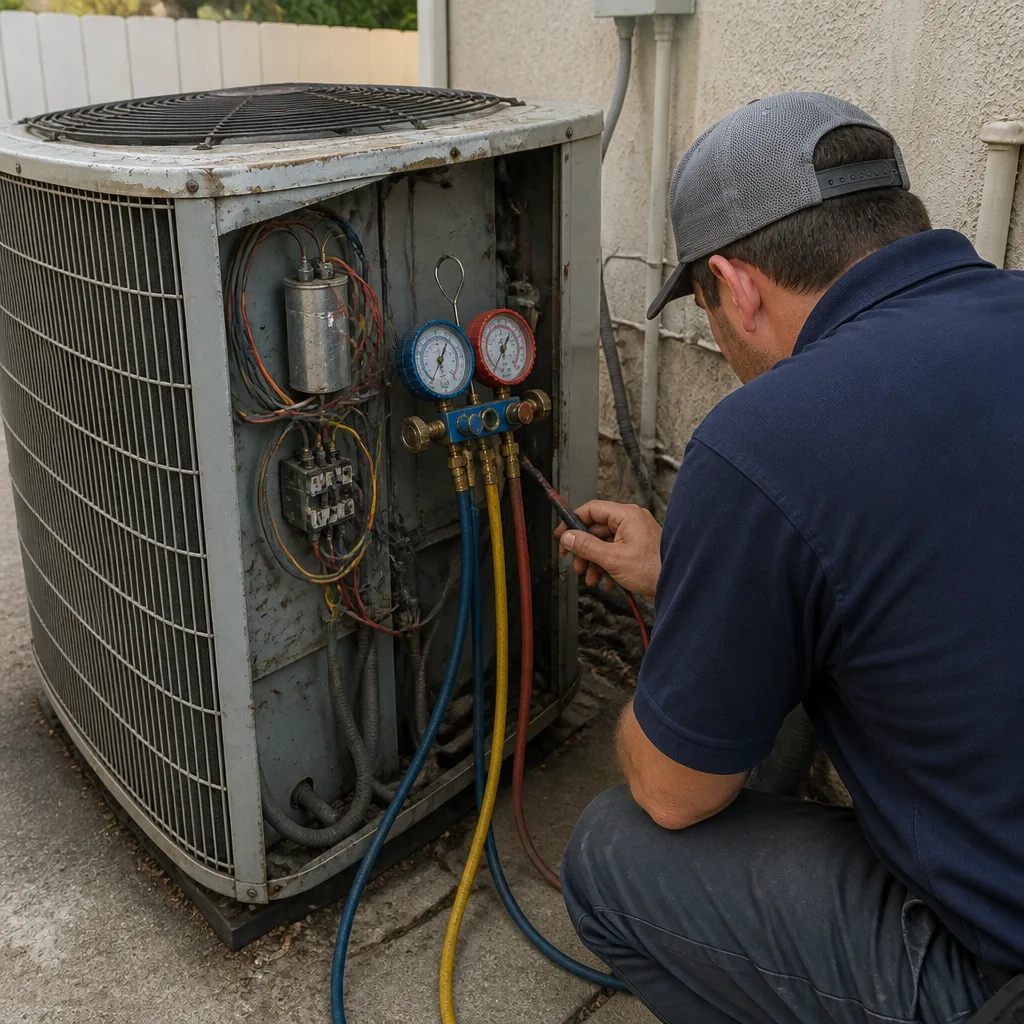 Before
 After
After